


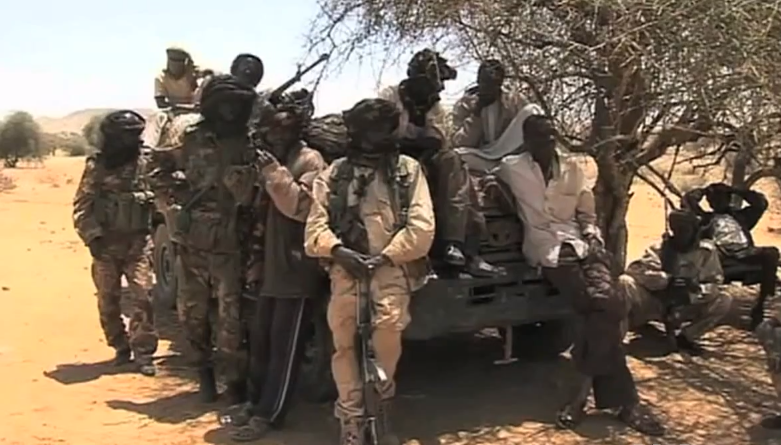
In the early 2000s Nigerian President Olusegun Obasanjo helped rescue Sudan from a civil war waged between the Islamic north and the Christian south, a conflict which had lasted over 20 years. How did Obasanjo manage to do this? Simply by flying to Khartoum and explaining to Sudanese President Omar Al-Bashir how Nigeria survived its own civil war – and how it had avoided another one. Obasanjo explained that Nigeria achieved this through diplomacy, tolerance and inclusivity, and by alternating political power between Muslims and Christians.
Unfortunately, the light-skinned population of northern Sudan have never seen the dark-skinned southerners as being their equals – or even as fully human. British colonial rule did not change this culture, and when northerners took power after independence they continued to look down on the southerners.
In the case of Nigeria, the Christian southerners were well-educated and able to claim a share of political power. But the Christians in Sudan found themselves excluded from government and eventually rose up under the leadership of John Garang. The resulting civil war ended in 2005 with the fortuitous death of Garang in a helicopter crash, and a referendum in 2011 led to the creation of the state of South Sudan.
Nigeria’s “great generation”
In the past Nigeria often intervened to promote peace and stability around the continent and further afield. We not only intervened in Sudan, but also in South Africa during apartheid, in Central African countries – including the Congo – and in West African countries such as Liberia and Sierra Leone. Indeed, our intervention went as far as the Caribbean. We brought peace, resolved labour disputes, and paid for Nigerian judges to fill positions around Africa.
But the leaders who achieved all this are now passing and their successors have neither experience nor foresight. Moreover, they lack moral compasses. One can only wonder what will come of this….
Nigeria today
The Nigerian elections in 2023 saw – for the second time – the election of Muslims as both President and Vice-President to the exclusion of Christians. However, northern Islamists were disappointed in their expectations because the new President is secular. So in his policies and appointments he embraced tribalism and cronyism rather than Islamism. In doing so he blocked moves by the Muslim clergy and the northern elite to take control of the political agenda. As for the downtrodden Muslim population, they – as always – looked to the life hereafter….
But despite the failure of their manoeuvres, the northern Muslims still expected Islamic domination and a nationwide introduction of Sharia law – as their clergy had prophesied – and they did not give up. The region had always celebrated the activities of Islamic Jihadists around the world and likewise Boko Haram – until the government’s crackdown made life uncomfortable.
A new civil war?
Even so, the fear persists that one day the government will lose control and Nigerian Jihadists will bring about a civil war. Apparently, the political elite are oblivious to this possibility even though when Nigerians contemplate international affairs – as they do ardently – southerners favour the west while northerners support the Islamists. And of course each side hopes that their side will emerge victorious.
Whenever Islamists score a success Muslim northerners are encouraged in their desire to unite under a single cleric and bring about Islamic government. But even if this approach fails, they will try normal political methods until their saviour arises. What they fail to understand is that the moment a President enacts Sharia law, civil war will break out. A pessimist would say that Nigeria is doomed either way.
Cause for hope?
On the other hand, perhaps a secular national leader will emerge, implement a truly secular constitution and give the country a new direction. The other option is a UN-backed referendum to avert disaster – as happened in Sudan.
But either way, the real problem is not political Islamism but human nature – our inclination towards racism, tribal ethnicism and our thirst for power. No UN resolution or army general can overcome these flaws. Only our own sense of social justice can save the day.
By Mubarak Bala
Writing from European exile