


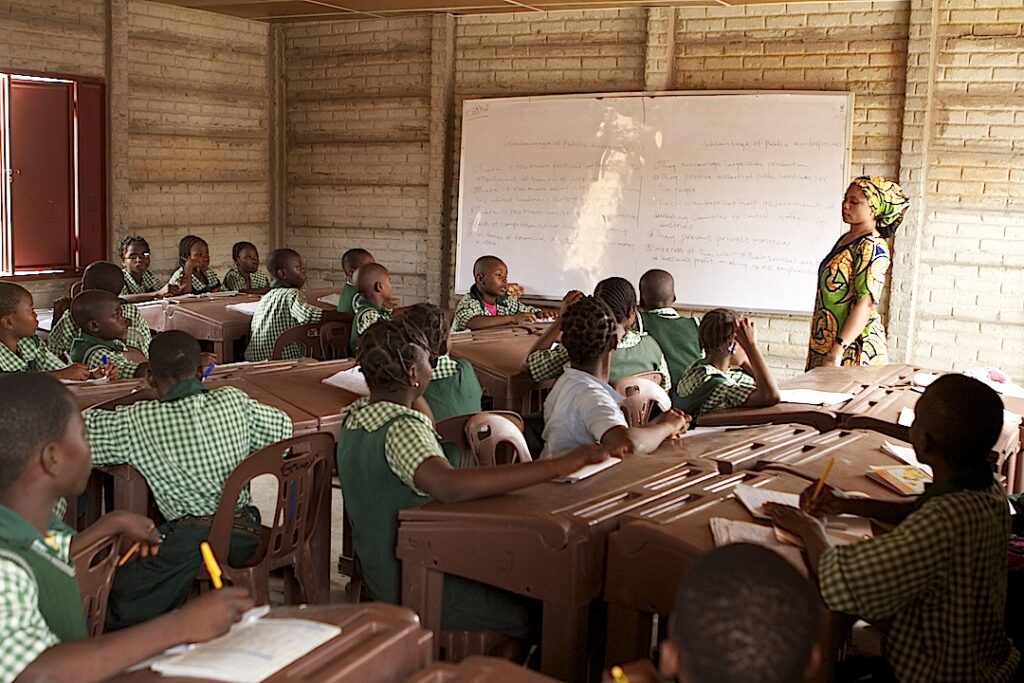
Nigeria’s struggle for human rights is perhaps most visible in the everyday experiences of its women and children. The country has laws and institutions intended to protect them, yet the distance between rights recognised on paper and rights experienced in daily life remains troublingly wide.
For Nigerian women and girls, discrimination and violence continue to restrict choices about education, economic independence, personal security and participation in society. The Federal Ministry of Women Affairs reported in 2025 that although the prevalence of child marriage had declined from 44 per cent to 28.6 per cent, Nigeria was still home to nearly 25 million child brides. The ministry itself described the situation as a national emergency.
These figures represent more than statistics. Behind them are girls whose childhoods, schooling and opportunities can be profoundly affected by early marriage and the social conditions surrounding it. A society cannot reasonably claim to protect human dignity while millions of girls face circumstances that limit their ability to determine the course of their own lives.
The challenges become even more severe in parts of Nigeria affected by armed conflict and insecurity. In north-east Nigeria, Amnesty International has documented the experiences of girls and young women who survived Boko Haram captivity. More than 80 survivors interviewed by the organisation described experiences including forced marriage and domestic servitude, followed in some cases by inadequate access to basic services after escaping captivity. Amnesty has called for survivors to receive medical care, education and livelihood support.
Children more broadly face another uncomfortable contradiction. Nigeria formally embraces the principle that children should survive, thrive and realise their potential, and the Federal Government continues to work with UNICEF on child-focused programmes. Yet UNICEF’s assessment of Nigerian children in 2025 found progress to be uneven and described a continuing gap between policy commitments and the lived experiences of many families.
This is where a humanist understanding of rights becomes particularly important. Rights should not depend upon a child’s gender, family income, ethnicity, religion or geographical location. A girl in rural northern Nigeria deserves the same opportunity to learn, develop and make meaningful choices about her future as a child born into a comfortable household in Lagos or Abuja. Human dignity is not something that governments or communities confer upon individuals. It belongs to them already.
Protecting women and children therefore requires more than legislation. Laws matter, but their value is ultimately measured by what happens in homes, schools, courts, police stations and communities.
Nigeria has made commitments to protecting its women and children. The harder task is turning those commitments into lived realities.
For humanists, this should be understood not simply as a women’s issue or a children’s issue, but as a fundamental test of society itself. The measure of progress is not merely the rights a nation declares, but the freedom, safety and opportunity its most vulnerable people actually experience.
By Mubarak Bala