


There is a particular kind of African who can recite, with passion and precision, every atrocity committed against the continent by foreign hands. He knows Walter Rodney by heart. He can quote the Berlin Conference of 1884, where European powers carved Africa into colonies over brandy and maps, without a single African in the room. He will tell you about King Leopold’s Congo, where hands were severed as punishment for failing rubber quotas, where an estimated ten million Congolese died so that one Belgian monarch could enrich himself (Hochschild, King Leopold’s Ghost, 1998).
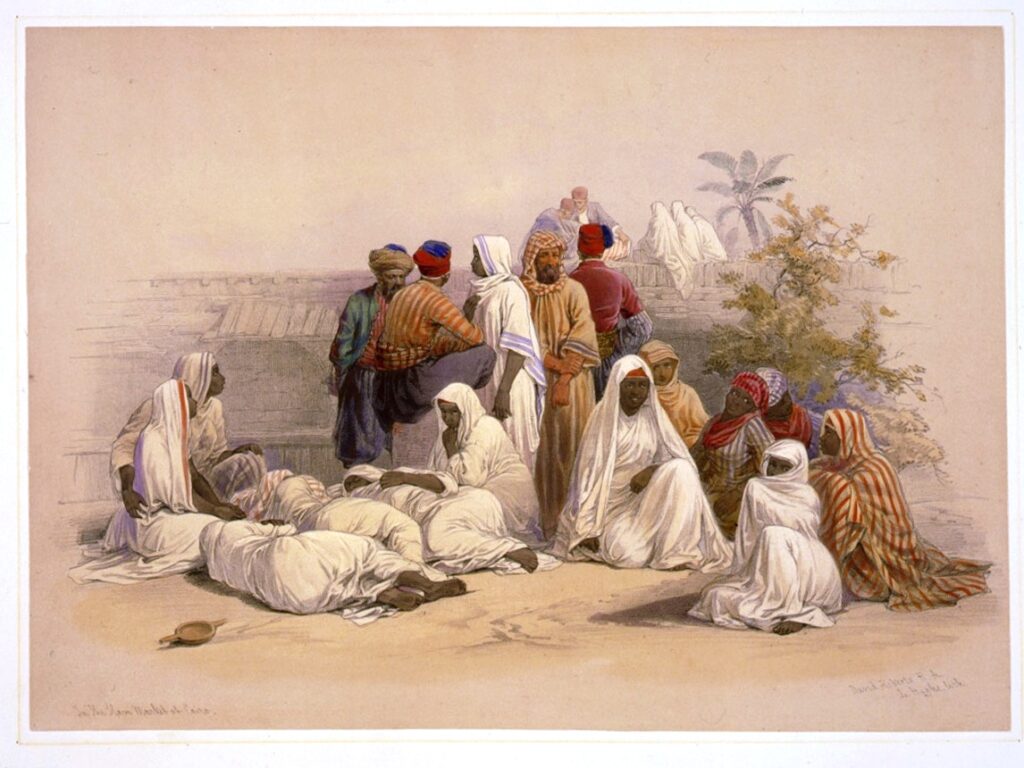
He knows about the Arab Slave Trade and the widespread castration of male African captives to serve as eunuchs for harems and royal courts. He will remind you of the transatlantic slave trade in which twelve to fifteen million Africans were shipped across the ocean in conditions so brutal that millions died before reaching shore (Lovejoy, Transformations in Slavery, 2000). He knows about structural adjustment programmes, about the IMF’s suffocating conditionalities, about how Europe underdeveloped Africa while calling it civilisation (Rodney, How Europe Underdeveloped Africa, 1972).
He is right about all of it.
And then he goes home, and he beats his wife because his religion tells him she is subordinate. He disowns his gay son because an imported theology tells him homosexuality is an abomination. He kills his daughter for converting to a religion other than his adopted religion. He kills fellow humans for not believing or believing differently. He hates other people just because a non-indigenous religion demeans those people. He votes along ethnic lines and religious lines, shields a corrupt kinsman from accountability, and participates in the slow strangulation of institutions that could have served everyone. He mourns colonialism on social media and re-enacts it in his own household, his own community and in his own country.
This is not a metaphor. This is a continent.
The dog collar we tightened ourselves
Let us be precise about something the loudest anti-colonial voices rarely mention: the Arab slave trade.
It predated the European transatlantic trade by centuries and outlasted it by decades. From the seventh century through the early twentieth, Arab traders moved an estimated seventeen million Africans out of the continent — far more than the transatlantic trade by most scholarly estimates (Segal, Islam’s Black Slaves, 2001). The methods were, if anything, more systematically dehumanising. Castration was routine, designed not merely to subjugate but to erase — to ensure that enslaved Africans would leave no descendants, no lineage, no future. This was not incidental cruelty. It was demographic erasure as policy.
Yet this trade receives a fraction of the moral outrage directed at European colonialism. Why? Partly because the post-colonial narrative of African victimhood has been curated almost exclusively to face westward. Partly because Islam arrived in Africa wearing the clothes of brotherhood and has since been absorbed so thoroughly into African identity that criticising Arab conduct feels, to many Africans, like criticising themselves. The dog collar arrived. And instead of resisting it, an entire civilisation decided it was a necklace.
The same is true of European Christianity. Missionaries came alongside colonial administrators — sometimes preceding them, sometimes following — and systematically dismantled indigenous cosmologies, knowledge systems, and ethical traditions that had sustained African communities for millennia. They told Africans that their ancestors were in hell. That their rituals were demonic. That their names were shameful. That their gods were false. And Africans, generation by generation, believed them. Today, the African who will march against Western imperialism will also spend his last naira on a Lagos megachurch built by a pastor who flies a private jet and sells anointed water. The coloniser left. The colony remained — rebranded as faith.
This is not an argument against religion. It is an argument against the abdication of critical thought. When you oppose foreign domination in the political sphere while embracing foreign domination in the spiritual sphere, you have not freed yourself. You have merely changed the flag above your cage.
By Kenneth Eze