


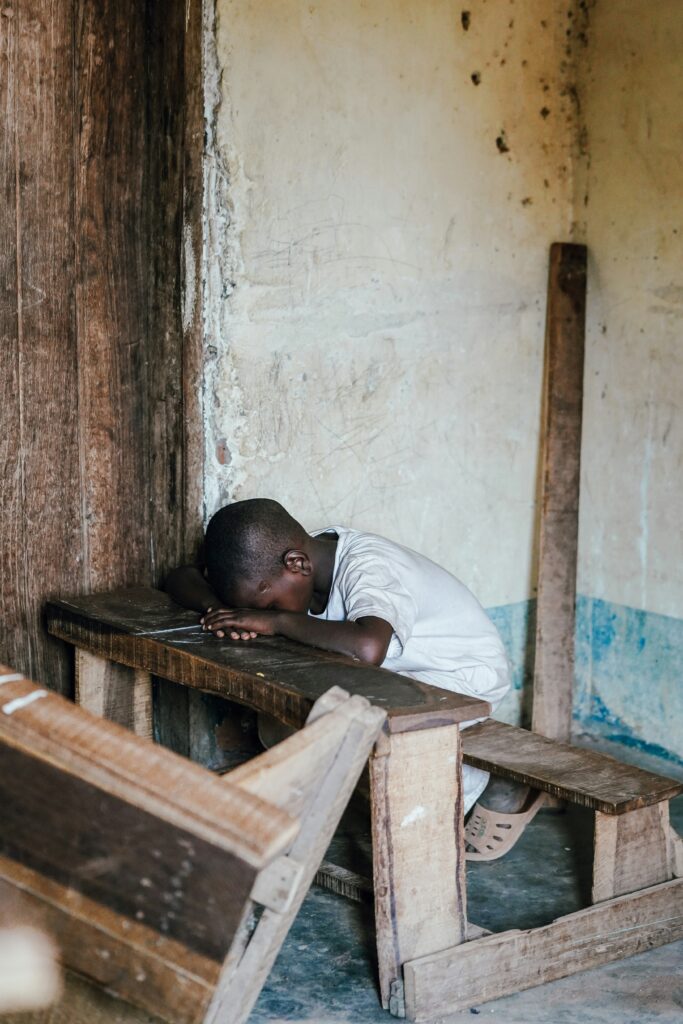
On a quiet street in Abuja, 15-year-old Musa has stopped going to school. His teachers say he became “unserious.” His neighbours say he fell into bad company. At home, his mother is overwhelmed, his father mostly absent. No one has asked a harder question: when did Musa begin to drift—and who noticed?
Musa’s story is not rare. It is simply overlooked.
Boys and girls
For years, across Nigeria and much of Africa, the rallying cry has been clear and justified: educate the girl child, empower the woman, close the gap. That push has produced real gains—more girls in school, more women in leadership, more voices where there used to be silence. It is progress that should not be denied.
But progress, when it leans too heavily to one side, creates a new imbalance.
While the spotlight shines brightly on girls, a quieter story is unfolding with boys. In classrooms, boys are increasingly disengaged. In homes, they are still raised with old expectations—be tough, don’t complain, carry responsibility early—yet they are given less guidance on how to meet those expectations in a rapidly changing world. In public conversation, their struggles are rarely named, let alone addressed.
This is the silent crisis of the boy child.
It is not a loud crisis. It does not march. It does not trend. It shows up in small, cumulative ways: a boy who loses interest in school; a young man who cannot articulate his emotions; a father who was never taught how to be present. Left unattended, these small fractures become social problems—crime, substance abuse, broken families, and a generation of men disconnected from purpose.
Talking about gender
Part of the difficulty lies in how we now talk about gender. In many modern discussions, women are framed as the ones to be protected and uplifted, while men are often treated as if they will simply manage on their own—or worse, as if they are the problem to be corrected. Reality is more complicated than that. Boys are not born with resilience fully formed. They are shaped, or misshaped, by the attention—or neglect—they receive.
Consider the issue of emotional development. From a young age, many boys are taught to suppress vulnerability. “Don’t cry.” “Be a man.” These instructions have been passed down for generations. Yet today’s world demands something different: emotional intelligence, communication, adaptability. Boys are expected to operate in this new reality without being equipped for it. The result is predictable. Many internalize their struggles until they surface as anger, withdrawal, or silence. Conditions like Depression and anxiety often go unrecognized in men, not because they are absent, but because they are hidden.
Education tells a similar story. While initiatives to support girls’ education remain necessary in many areas, there is growing evidence—both globally and locally—that boys are falling behind in engagement and performance. A system that once needed to pull girls up is now, in some cases, failing to keep boys from slipping down. Yet public policy and advocacy have been slow to adjust to this shift.
Feminism
None of this is an argument against feminism. That would be a mistake, and an unfair one. Feminism, at its best, has corrected real injustices and expanded opportunities that were long denied. But any movement, when it becomes narrowly focused, risks overlooking unintended consequences. The question is not whether women should continue to be empowered—they should. The question is whether that empowerment has come with a blind spot.
Because a society does not function on the strength of one gender alone.
When boys are neglected, the consequences do not remain with them. They spill into families, communities, and the broader social fabric. The boy who grows up without direction becomes the man who struggles with responsibility. The man who struggles with responsibility affects the stability of homes, the upbringing of children, and the safety of communities. Ignoring the development of boys today is, in effect, postponing a larger problem for tomorrow.
What then is required?
First, a shift in attention. Not away from girls, but toward balance. Advocacy must evolve to include the boy child—not as an afterthought, but as a priority alongside the girl child.
Second, a rethinking of how boys are raised. Strength should no longer mean silence. Responsibility should come with guidance. Boys need mentors, structure, and permission to develop emotionally without shame.
Third, a more honest conversation about gender. One that moves beyond slogans and acknowledges that both men and women face challenges—different in nature, but equally real in consequence.
Musa’s story does not have to end the way many expect. With attention, structure, and guidance, boys like him can recover direction. But that requires something simple and often missing: intentional care.
A society that raises strong women while neglecting its boys is not achieving balance—it is merely shifting the weight. True progress demands more than correction of the past; it requires foresight about the future.
And the future will depend, in no small part, on the boys we are currently ignoring.
By Mary Moore