


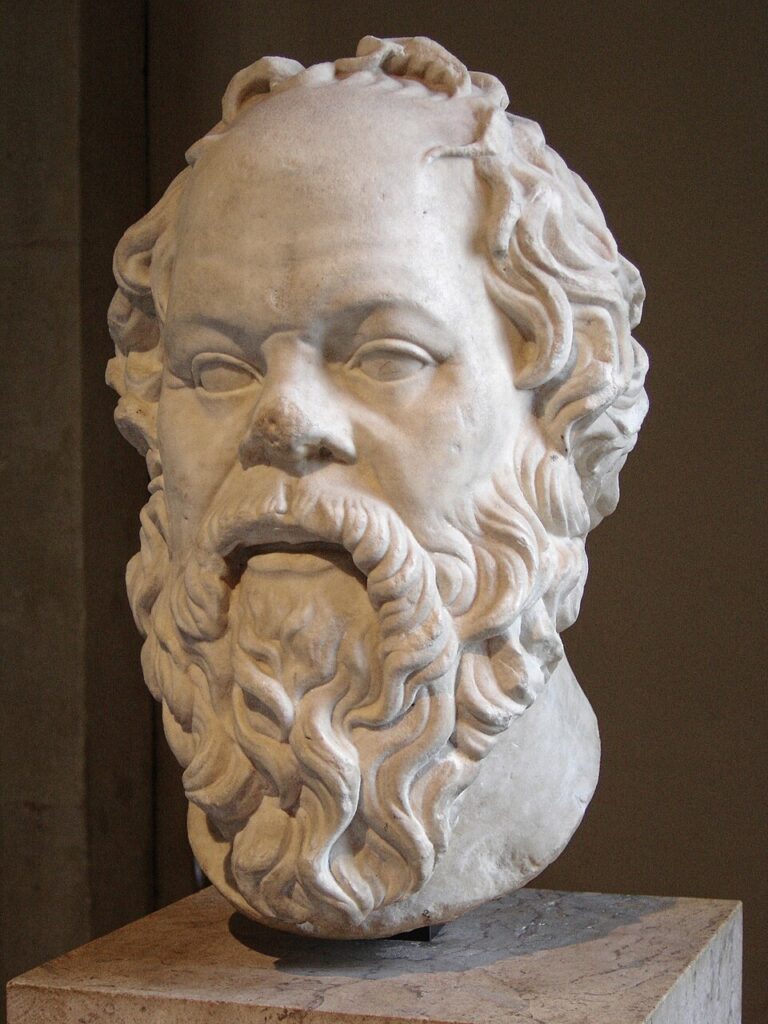
Socrates was offered a way out. His friends had arranged everything — a boat, a route, a life in exile. All he had to do was stop asking questions. He refused. He drank the hemlock instead, not with great drama, but with the calm of a man who had already made his peace with what he knew and what he did not know. What he knew was this: that he knew nothing. And that admission — that radical, costly, unfashionable honesty about the limits of human knowledge — was the most dangerous idea in Athens. It still is.
I think about Socrates often. Not as an academic exercise but as a personal reckoning. I know what happens to truth tellers in the societies I inhabit. I know the cost of asking questions that others have decided are already answered. And yet something in that image — a man choosing the hemlock over the comfortable lie — gives me something to live for. And if necessary, something to die for.
I did not arrive at my position today. It was not handed to me with a book or a teacher or a single moment of revelation. It came slowly, through experience, through losses, through the kind of thinking that happens when you can no longer afford comfortable answers. I have faced things (most times from headless mobs) that most people face religion to survive: grief, mortality, threats (of death and amputation), assault, deprivation, disregard, ostracism, alienation, outright disrespect, suffering without explanation, the kind of injustice that makes a mockery of any claim that the universe is just. I faced them (still healing and surviving) without the placebo. I will not pretend that was easy.
Ignorance is bliss
There is a loneliness particular to clarity. Ignorance, as the saying goes, is bliss. The person who believes that death is a door rather than a wall, that suffering is part of a plan too vast to see, that the loved one lost is waiting somewhere — that person has access to a consolation that is genuine in its effects even if it is not grounded in evidence. I do not have that consolation. I face death as it is. I face suffering as it is. When a diagnosis is terminal, I cannot tell myself that divine intervention will override the biology. When someone I love is gone, I cannot reach for the comfort of reunion.
I am not saying this to claim superiority. I am saying it because it is true and because secular thinkers rarely say it honestly. We sometimes speak as though reason is not only more accurate than faith but also easier. It is not. It is harder. The examined life, as Socrates said, is the only one worth living. He did not say it was the most comfortable one.
What secular people reach for, in the absence of religion, is each other. Human solidarity. The knowledge that suffering is shared, that meaning is made rather than given, that the brief time we have is worth spending with honesty and attention. This is not nothing. In my experience it is enough. But I will not lie and say it asks nothing of you. It asks everything. It asks you to look at things as they are.
And yet I would not force this on anyone. When I sit with someone whose age has made them fragile, whose losses have accumulated beyond what philosophy can absorb, I do not discuss secularism with them. I let them have what helps them. The placebo that causes no harm to others is not my business to remove. Ignorance, in those moments, is not a failure. It is mercy.
Being honest
Socrates did not die because he told people what to believe. He died because he kept asking them why they believed what they believed. The distinction matters. The examined life is not the life of someone who has arrived at the correct answer. It is the life of someone who keeps questioning their own answers, who treats every certainty as provisional, who understands that the map is not the territory and the doctrine is not the truth.
I am not a believer. I am also not a dismisser. I have lived too close to the realities that religion addresses — mortality, suffering, injustice, the hunger for meaning — to wave them away with the comfortable superiority that sometimes passes for secular sophistication. The questions religion tries to answer are real questions. That the answers it gives are not well-supported by evidence does not make the questions less real or the hunger behind them less human.
What I am is honest. Honest about what I know and what I do not know. Honest about the cost of clarity and the genuine value of consolation. Honest about the difference between private faith and public harm. Honest about the fact that the ultimate reality — whatever it is, if it is anything — is not yet within our grasp, and that anyone who tells you otherwise is selling something.
The tradition I belong to is not necessarily atheism, though I am not a theist. It is not anti-religion, though I will not be silent about religious harm. It is the tradition of Socrates, who knew that admitted ignorance is the beginning of wisdom. It is the tradition of every human being who has chosen the harder path of honest inquiry over the easier path of received certainty. It is not a comfortable tradition. It does not offer eternal life or cosmic justice or the warm embrace of a community gathered in shared conviction. What it offers is something rarer: the dignity of facing things as they are, and the freedom that comes from no longer needing the world to be other than it is.
By Kenneth Eze