


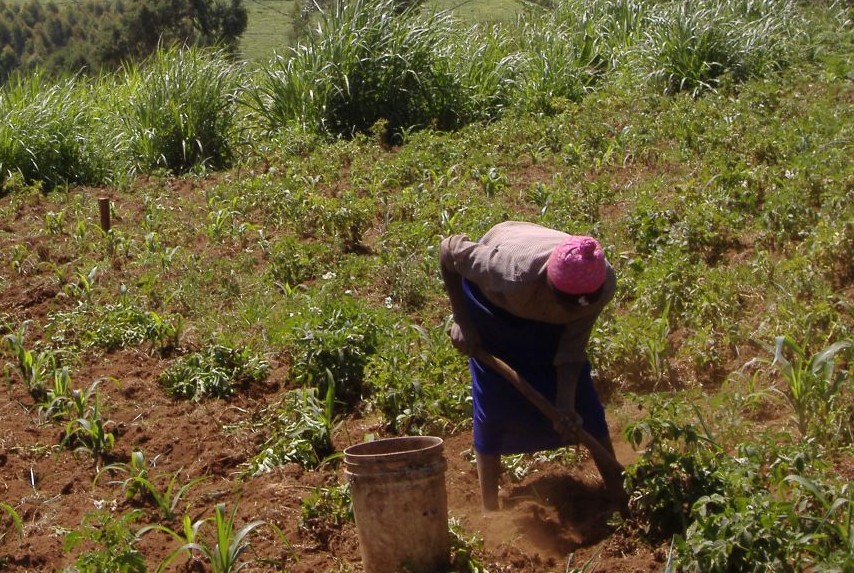
To be in poverty is to be without the money needed for basic requirements like food, clean water, shelter, clothing, and access to healthcare and education. The World Bank defines ‘extreme’ poverty as having a household income of less than $2.15 a day. This contrasts with ‘relative’ poverty – having less than the average in one’s own society.
Capitalism and Marxism
Capitalism’s relationship with poverty is complex. Some argue that capitalism by its nature creates poverty through the exploitation of workers. Others say that capitalism creates growth that lifts millions out of extreme poverty. Critics of capitalism point to issues such as wage suppression, precarious job security and the concentration of wealth in the hands of a few. But defenders of capitalism highlight data on historical GDP growth and poverty reduction. This defence often recommends allowing a combination of market forces and policy interventions to guide the economy and stimulate growth.
Marxists respond by claiming that poverty and inequality are functional components of the capitalist mode of production. Capitalism necessarily produces social inequality which is handed down from one generation to the next. From the Marxist perspective capitalism creates a bourgeoisie which exploits the proletariat. Employment is deliberately restricted, creating an ‘industrial reserve army’ of cheap labour. This enables the bourgeoisie to supress wages and maximise profits. The result is that the proletariat remain in poverty.
African poverty
As an African, I naturally want to highlight Walter Rodney’s point of view. Rodney argued that African poverty is not natural but is the direct result of European engagement with the continent. Europeans exploited Africa’s resources – labour and raw materials – both through the slave trade and by means of colonialism. This hindered African development, created dependence, and restructured African society to serve European capitalism. The result was to promote European economic growth while holding Africa back.
Despite recent economic growth, sub-Saharan Africa is home to a majority of the world’s poor. Over 40% of Africans live in extreme poverty. The causes include political instability, conflict, climate shocks, inadequate infrastructure, limited education and healthcare, high youth unemployment and corruption. Many of these factors are the legacy of colonialism. With growth stalling, emphasis now needs to be placed sustainable development, health and more efficient agricultural practices.
Equality
Is equality merely a utopian dream? Is it possible to create an equal society without restricting liberty – or without creating new inequalities? Equality demands that everyone has the same basic rights. These include the right to free expression, to access education and healthcare, and to live in security. It also requires that justice becomes the foundation of social equality so that all citizens have the resources they need to promote their personal well-being.
The desire to create a perfectly equal society is a powerful ideal which has resulted in much good being done. But it is also a concept that challenges our understanding of human nature. Constructing an equal society free of poverty remains a utopian aspiration.
By Godfrey Selbar