


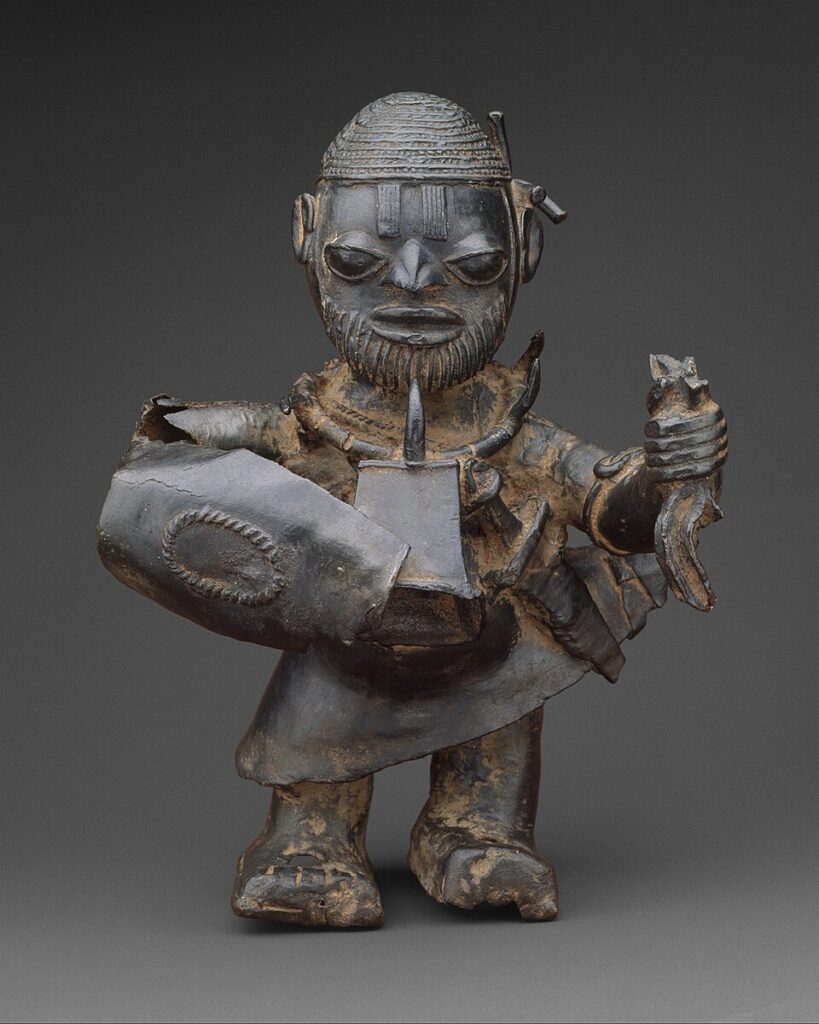
In some parts of Africa, including Nigeria, certain artifacts are considered sacred – or are even worshipped as gods – because of their perceived spiritual significance or connection to ancestors and the divine.
These artifacts are often seen as a bridge between the physical and spiritual worlds. They are believed to hold spiritual power or energy, and people may use them as a way to communicate with ancestors, gods, or spirits. For example, in some Nigerian cultures, masks are considered sacred artifacts that represent ancestral spirits or deities. They are used in rituals and ceremonies to connect with the spiritual realm and bring good fortune, protection, or healing. In a way, these artifacts are not just objects, but gateways to the unknown, holding deep cultural and spiritual significance.
History of Stolen Nigerian Artifacts
The history of stolen Nigerian artifacts is a long and painful one. During the colonial era, many precious artifacts were taken from Nigeria by British colonisers without permission. Their removal has been a source of cultural and emotional pain for Nigerians.
After Nigeria gained independence in 1960, the theft and illicit trade of artifacts continued. Many artifacts were stolen from museums, shrines, and communities, often with the involvement of corrupt individuals. The 1960s and 1970s saw a surge in art theft, with many valuable artifacts being smuggled out of the country. The civil war (1967-1970) also created opportunities for looting, as many cultural institutions were destroyed or abandoned.
International art dealers and collectors fuelled the demand for Nigerian artifacts, often ignoring their illicit origins. Many artifacts ended up in museums and private collections worldwide, sometimes with questionable provenance. The Nigerian government has made efforts to combat the trade, including passing laws and collaborating with international organizations. However, the illicit trade persists, driven by poverty and greed.
Repatriation
Stolen Nigerian artifacts include Benin bronzes, Nok terracottas, Ife bronzes, Igbo-Ukwu artifacts, Ekpili masks and Tsoede Bronzes. These treasures are not just valuable art pieces but also hold significant cultural and historical importance for Nigeria.
Benin Bronzes: very many bronze plaques and sculptures were looted from the Kingdom of Benin in 1897. They’re now in museums worldwide, including the British Museum.
Nok Terracottas: these are ancient sculptures from the Nok culture (500 BCE – 500 CE) and are highly prized by collectors.
Ife Bronzes: beautifully crafted metal heads and sculptures from the Ife Kingdom (12th-15th century).
Igbo-Ukwu Artifacts: Intricate bronze and copper artifacts from the Igbo-Ukwu culture (9th-10th century).
Ekpili Masks: Colourful masks from the Ekpili culture, used in traditional ceremonies.
Tsoede Reliquary: A 16th-century bronze statue from the Tsoede culture, stolen in the 1980s and returned to Nigeria in 2021.
Nigerian government initiatives and collaborations.
The Nigerian government has been actively seeking the return of items from Nigeria’s lost heritage. The government has rallied international support, partnering with countries like Pakistan, Palestine, Kenya, Peru, and Saudi Arabia to propose a draft resolution on repatriating stolen assets. It has also established the National Commission for Museums and Monuments to oversee repatriation efforts and ensure proper preservation of returned artifacts. These efforts demonstrate Nigeria’s commitment to recovering its stolen cultural heritage.
Repatriation Successes
Benin Bronzes: The Netherlands returned 119 Benin bronzes, including figurines, an axe, and a relief plaque, in February 2025. Germany has agreed to return over 1,130 of the bronzes, and the first batch of 22 were returned in December 2022. The Horniman Museum in the United Kingdom returned 72 bronzes in 2022. (The University of Aberdeen returned a bronze in 2021).
Nok Terracottas: In 2020 the US returned several Nok Terracottas to Nigeria, citing the 1970 UNESCO Convention (1970). This was a significant repatriation success, showing international cooperation in fighting cultural heritage looting.
Challenges and Politics
The return of Nigerian stolen artifacts faces several challenges which have delayed their return despite efforts to reclaim them.
Museum and Collector Resistance: Some museums and collectors are reluctant to return artifacts, citing ownership rights or claiming they’re important cultural objects preserved for humanity. They might also demand significant compensation or collaboration agreements.
Legal Complexities and Ownership Disputes: Laws around cultural property are complex, and proving ownership can be difficult. Some artifacts were sold or transferred under questionable circumstances, making it hard to determine rightful owners.
Lack of Resources and Infrastructure: Nigeria needs adequate facilities, staff, and funding to preserve and showcase returned artifacts. Concerns about artifacts being properly cared for can lead to resistance from current holders.
Politics and Diplomacy: Repatriation efforts can be influenced by political relationships, economic interests, and international diplomacy. Governments and institutions might prioritize other issues over cultural heritage repatriation.
Conclusion
Nigeria has seen significant returns, like the Benin Bronzes from countries like the Netherlands, Germany, and UK institutions. The Nok Terracotta’s repatriation from the US was also a success. But many artifacts are still abroad, held by museums and collectors resistant to return. Legal complexities, lack of resources in Nigeria, and politics can slow repatriation.
International support is crucial. Cooperation helps overcome legal and practical hurdles, ensuring artifacts return to Nigeria safely. It also supports cultural heritage preservation and reconciliation. Meanwhile, Nigeria needs stronger laws and facilities to preserve returned artefacts. Digital repatriation and collaboration with international institutions can also help.
By Ijeoma Adeniyi