


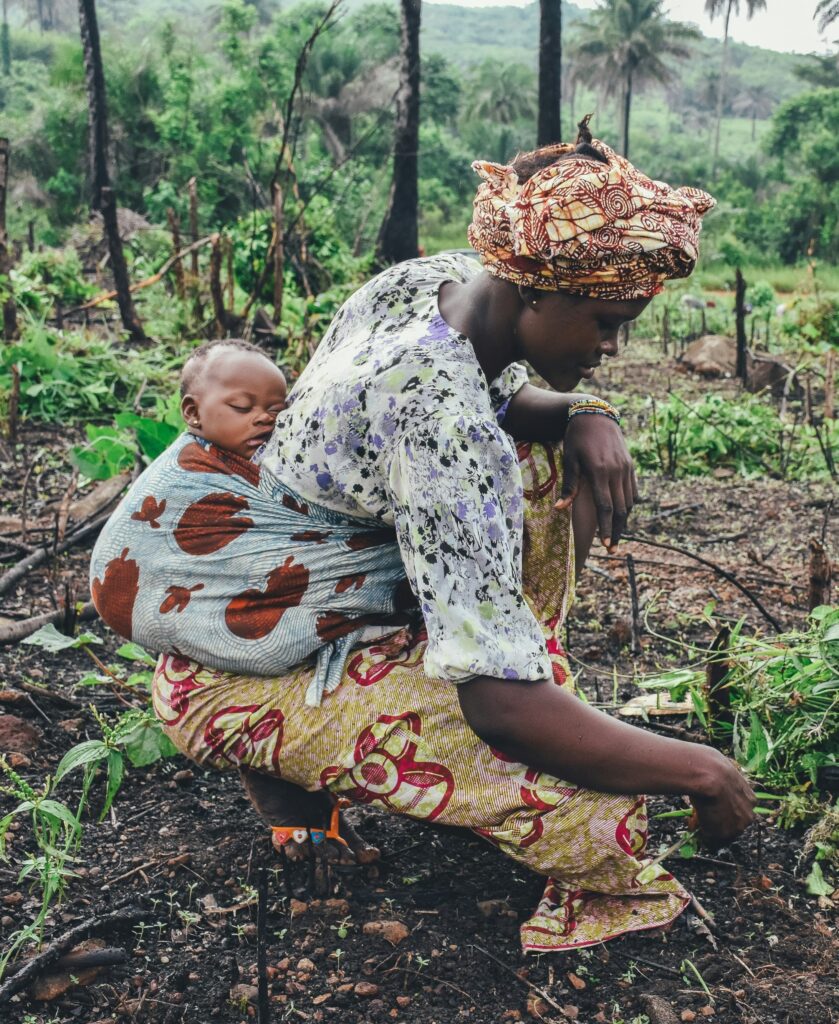
There is an African proverb that says, “Education of a woman equals education of a nation”. Fewer phrases could convey the reality of the development situation in Africa. Throughout the continent, women are the invisible builders of families, communities and economies. They get up early in the morning, far before the sun rises to work the fields and tend to their businesses, raise their children, maintain their culture and help build the nation. African women, whether in busy cities or far-flung villages, are still showing great resilience in the face of immense social and economic difficulties.
But their narratives are frequently paradoxical. They grow most of Africa’s food but have only a small amount of the land. They take over informal trade and have limited access to credit and financial services. They raise up the next generation of leaders and are under-represented in political leadership. Notwithstanding these facts, African women are making history. They are being educated, creating business ventures, developing new technology, making an alternative voice, and serving the public good. They are overcoming barriers that seemed impossible to clear.
African women’s empowerment is integral to Africa’s future. A sustainable development cannot be achieved, if half of the population is not able to participate in economic, political and social life. With Africa moving towards innovation and integration, African women are playing a pivotal role in shaping a more prosperous and inclusive future.
Confronting Complex Problems
Many African women are faced with challenges from a very early age. Unfortunately, in certain communities’ girls receive unequal access to education due to poverty, marriage, domestic duties, or cultural expectations over schooling. Despite the improvement of enrolment in many countries, millions of girls are missing out on school or dropping out at an early stage. Opportunities for decent jobs, entrepreneurship and leadership are much restricted in the absence of education.
Economic inequality continues to be a primary issue. Women play a significant role in agriculture, small enterprises and the informal economy but many women do not own factors of production (land and property). Often access to bank loans, modern farming machines, business training and investment capital are limited. Consequently, many hardworking women have great ideas that they can’t take to the next level and can’t expand their business because they don’t have the means to do so.
Gender-based violence persists and continues to threaten the security and dignity of millions of women. Many communities continue to be subject to domestic abuse, sexual violence, workplace harassment, child marriage and trafficking in persons. These experiences leave behind profound and lasting physical, emotional and economic wounds, reducing women’s confidence and opportunities. While there have been some improvements in laws and awareness-raising campaigns to address the issue, the impact has been inconsistent in some countries.
Healthcare poses great difficulty, too. Lack of access to good maternal health and reproductive health services, as well as access to modern medical facilities, is common for many women, especially in rural settings. Although every death is preventable, there are still areas in Africa that continue to have maternal deaths as a cause of concern. Inadequate healthcare infrastructure and poverty continue to adversely impact women’s health, particularly in the context of diseases like malaria, cervical cancer, breast cancer and HIV/AIDS.
In most parts of Africa, women continue to be underrepresented in elected positions, formal governance and leadership. Many competent women do not run for public office because of financial restrictions, political violence, gender bias and lack of party interest. This means that sometimes women are under-represented in decision making groups and decisions are made without them.
Education and Economic Independence
Education, however, is revolutionizing the lives of African women in extraordinary ways, despite these problems. Over the years, there has been an increase in the number of female students in secondary schools and attending higher education institutions (universities, technical, and vocational institutions and training centres). They are emerging as doctors, engineers, lawyers, teachers, scientists, journalists, entrepreneurs and innovators, changing African societies.
Education is not just to enhance future employment opportunities. It postpones child marriage, lowers maternal mortality, boosts household incomes, enhances democratic participation and enables women to inform their choices regarding life. Educated mothers are more likely to educate their own children, thus, instilling a powerful cycle of development that will be passed down to future generations.
Entrepreneurship is one of the most potential avenues for promoting women empowerment. In Africa women are the owner of millions of SMEs, which are a source of job creation and support the local economy. Women are showing that innovation doesn’t care about gender, from fashion design to food processing, the digital services to renewable energy, agribusiness to manufacturing.
This change has been sped up by technology. Women have been able to engage customers outside their local area by using mobile banking, digital payment platforms, social media marketing and online marketplaces. It’s now easy for a young Lagos entrepreneur to sell products to a customer in Nairobi, Kigali or Johannesburg. Digital literacy is unlocking opportunities for online work, learning, and international connections, enabling African women to thrive in the global economy. Digital literacy is enabling African women to participate in the global economy, opportunities for online work, education and international connections.
Financial inclusion measures are also important. Many women are gaining access to capital for the first time through microfinance institutions, cooperative societies, savings groups and investment programmes for women. While funding remains a challenge, these efforts have given thousands of women opportunities to invest in their enterprises, boost family incomes and make a greater a positive impact on national development.
More grounds for optimism
African women are inspiring the continent to redefine leadership in a myriad of ways. They have been appointed as presidents, ministers, judges, ambassadors, vice-chancellor of universities, executives of companies, military officers, researchers, and community leaders. Their successes prove that diversity and inclusion make a stronger leader.
Young African women are also playing key roles in the discussion on climate action, digital innovation, public health, education and social justice. Many are finding solutions to local issues through grassroots organisations and social enterprises, whilst making a difference to future generations by enabling them to dream bigger.
The African Continental Free Trade Area (AfCFTA) provides a tremendous opportunity for women in cross-border trade. The facilitation of customs procedures, the growth of regional markets and enhanced trade policies could boost women’s involvement in the commerce of the continent. Women traders are already a key part of the informal sector in Africa, and greater integration could lead to a significant benefit for them.
There are grounds for optimism as well with this change in attitude within African societies. Increasingly, there is recognition among more families of the importance of educating daughters as well as sons. More and more men are willing to support the leadership of women and shared responsibilities in the family. Media, literature, sports and entertainment keep promoting and honouring the achievements of successful women from Africa that inspire millions of girls in Africa.
But for real change, it takes a long time of commitment. Governments need to invest in the education, health care, legal reform, digital infrastructure and economic opportunities of girls. Employment practices and leadership development in private sector organisations should be based on equal opportunities. Communities need to confront destructive cultural practices, and support those that sustain dignity and respect. Empowerment is not a privilege for women, but fundamental human right and is an inseparable condition for the development of the country.
The Road Ahead
The world is at a crucial juncture in its development in Africa. The continent has one of the youngest populations in the world, growing digital connectivity and increasing regional cooperation, and has a tremendous potential for inclusive growth. The key to realizing this potential is the extent to which African societies invest in their women and girls.
Closing the gender gap in education, health, finance, technology and leadership improves the well-being of entire communities. Families gain good health, businesses grow stronger, economies are more productive, democratic institutions are more representative. Gender equality is thus not a ‘women’s’ issue but a development approach for all.
African women’s story is no longer a struggle story. It’s more of a tale of resilience, innovation, leadership and hope. Each educated girl, every successful entrepreneur, each woman voted into public office, each barrier that is broken makes for a stronger Africa. The successes they have reached are a testament to the fact that progress can be made when talent is unleashed regardless of gender.
The future of Africa will be shaped not only by men or women, but by societies that value and understand the equal worth and limitless potential of every citizen. Investing in women today is investing in Africa’s future of increased prosperity, justice and common progress. African women’s rise is no ordinary social change; it is one of Africa’s twenty-first century success stories.
By Zacham Bayei