







Legal and Institutional Barriers
Most African constitutions guarantee freedom of religion and conscience as fundamental human rights—in principle, at least. The African Charter on Human and Peoples’ Rights, ratified by 54 nations, explicitly protects the right to freedom of thought and religion. Under the 1999 Nigerian Constitution, freedom of religion and conscience is a fundamental human right guaranteed by Section 38(1), which protects the freedom to think, have a conscience, and practice one’s religion or belief, including the right to change it and to manifest it alone or in community with others. Yet in practice, constitutional promises often dissolve when confronted with legal codes, institutional practices, political realities that privilege religious identity and societal authoritarianism.
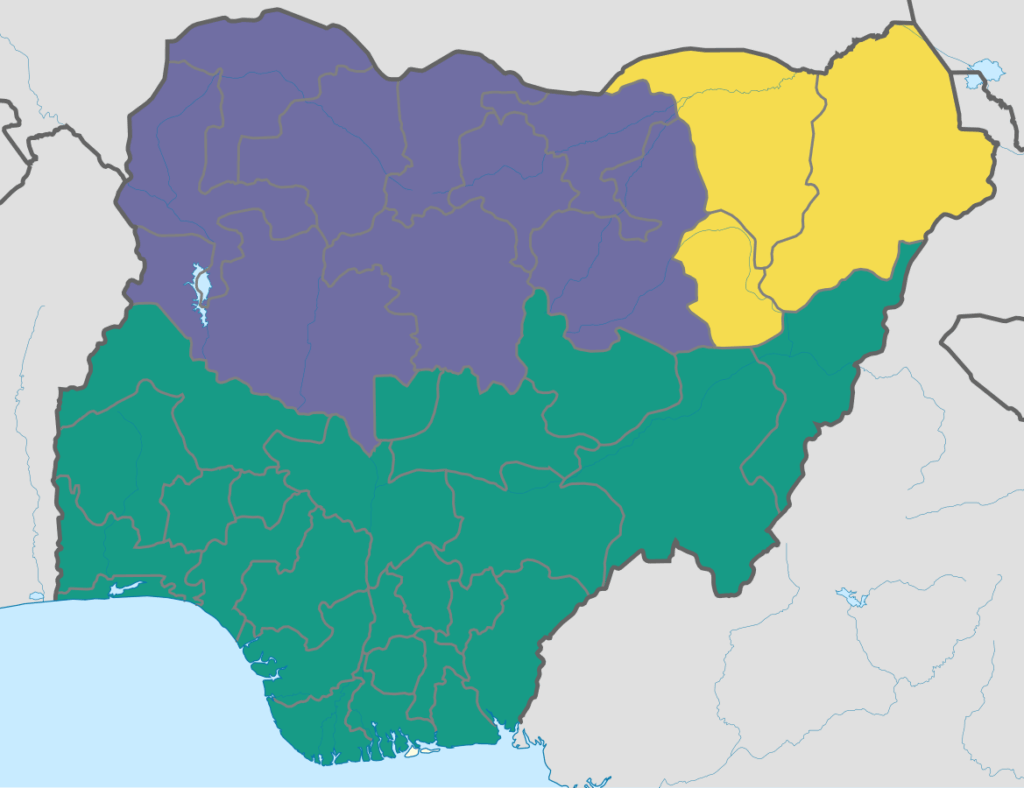
Blasphemy laws represent the most direct legal threat to secular expression. In Nigeria, twelve northern states enforce Sharia law where blasphemy carries penalties including death sentences, though executions remain rare. A 2020 case saw Omar Farouk, a 13-year-old boy, sentenced to ten years imprisonment for blasphemous comments during an argument. Even in states governed by secular law, Nigeria’s federal penal code criminalizes statements that wound religious feelings. Similar provisions exist across the continent—Mauritania, Somalia, and Sudan maintain particularly harsh blasphemy statutes, while countries like Kenya and Tanzania retain colonial-era laws penalizing religious insults.
These laws create chilling effects far beyond courtrooms. They signal that questioning religious claims, criticizing religious institutions, or expressing non-belief constitutes legitimate grounds for state punishment. Secular activists, writers, and public intellectuals self-censor, avoiding topics that might trigger accusations. The mere existence of blasphemy provisions transforms freedom of conscience from a protected right into a risky provocation.
Institutional discrimination extends beyond criminal law. Section 10 of the 1999 Nigerian Constitution explicitly states that the government of the Federation or of any State in the federation shall not adopt any religion as a state religion, but the government is permitted to provide facilities for religious life and has been involved in financing pilgrimages, which some argue contradicts the principle of secularism by providing state support for religion. This same constitution allows for the establishment of Sharia Courts of Appeal, which has led to debate over whether Nigeria is a strictly secular state or a multi-religious state with some religious influence in its legal system.
Government ceremonies routinely begin with prayers from multiple faiths, but never secular invocations. Public schools in many countries mandate religious instruction, offering no secular ethics alternatives. Official documents frequently require religious affiliation declarations; “none” or “atheist” options are often absent, forcing secular citizens to falsely claim religious identities for bureaucratic purposes. Employment in certain sectors, particularly education and civil service, carries informal religious tests where known non-believers face blocked promotions or hiring discrimination.
Political representation remains virtually impossible. No openly atheist legislators serve in most African parliaments. Politicians who hint at religious skepticism face immediate attacks questioning their moral fitness for leadership. The implicit message is clear: full citizenship and public participation require religious credentials, rendering secular Africans politically invisible and voiceless.
The Humanist Case for Change
Humanism attaches prime importance to human progress much more than beliefs and doctrines. In that same vein, Humanists view freedom of conscience and belief as a fundamental human right, encompassing the freedom to hold any belief or none at all, including atheism, agnosticism, and humanism. This freedom includes the right to change one’s beliefs and to express them, while also emphasizing the importance of a secular public sphere to ensure equal freedoms for all, including the non-religious. Humanists believe this freedom is essential for individuals to live ethically and rationally, grounded in human values and scientific inquiry.
The case for genuine freedom of conscience in Africa rests on principles already embedded in African legal frameworks and the practical benefits of pluralistic tolerance. Article 18 of the Universal Declaration of Human Rights, which African nations helped craft and ratify, explicitly protects the right to change or abandon religious beliefs. The question is not whether this right exists on paper, but whether African societies will honor it in practice.
Critics often dismiss calls for secular accommodation as neo-colonial impositions, arguing that religious skepticism represents Western decadence incompatible with African values. This objection collapses under scrutiny. Philosophical questioning, ethical debate, and religious diversity have existed across African societies for millennia. Pre-colonial African communities accommodated varying beliefs within complex cosmologies; the insistence on religious uniformity often reflects colonial-era impositions rather than indigenous traditions. Contemporary African secularism is homegrown, emerging from Africans’ own intellectual journeys, not foreign propaganda.
Moreover, protecting freedom of conscience strengthens rather than weakens African societies. Pluralistic tolerance reduces social conflict by creating space for peaceful coexistence among diverse worldviews. When citizens need not fear persecution for private beliefs, they invest energy in productive contributions rather than exhausting resources on religious performance and sectarian battles. Societies that respect dissent foster innovation, critical thinking, and intellectual honesty—qualities essential for addressing Africa’s development challenges.
The moral argument is equally compelling. Coerced belief is worthless belief; faith maintained through fear of social punishment lacks authenticity. Religious communities should want voluntary adherents whose commitment flows from genuine conviction, not captive audiences trapped by legal penalties and social terrorism. Defending secular Africans’ right to conscience ultimately defends the integrity of religious choice itself.
Finally, demographic reality demands accommodation. Africa’s secular population exists and is growing, particularly among educated youth exposed to diverse ideas through digital connectivity. Denying their existence or forcing underground communities breeds resentment and social fragmentation. Acknowledging and protecting this diversity is not capitulation; it is honest governance that reflects the actual complexity of contemporary African identities.
Conclusion
Freedom of conscience in multi-religious African societies remains an unfinished project. Constitutional guarantees mean little when families disown their children for honest doubt, when laws criminalize religious criticism, and when entire communities treat non-belief as moral deficiency requiring correction. The secular Africans navigating these realities are not asking for special privileges or the dismantling of religious practice. They seek only what human rights frameworks already promise: the ability to live authentically according to their convictions without fear.
The path forward requires courage from multiple quarters and concrete action at every level. Legally, advocacy organizations like the Atheist Society of Nigeria and Humanists International are already documenting blasphemy law violations and pushing for legislative reform; their work must be amplified through regional human rights coalitions and strategic litigation that challenges these laws in African courts. Institutionally, governments must remove religious requirements from official documents, create secular ethics alternatives in public schools, and end state financing of religious activities like pilgrimages. Socially, religious communities must recognize that coexistence means accepting not just other faiths, but no faith — a shift that begins with religious leaders publicly affirming the human rights of non-believers.
Within families, secular Africans are building support networks through online platforms and discrete meetup groups, creating the solidarity needed to navigate disclosure and providing proof that community exists beyond religious affiliation. Legal aid organizations should establish hotlines and resources specifically for individuals facing family violence or employment discrimination due to religious identity. Most crucially, African human rights organizations must explicitly include freedom from religion—not just freedom of religion—in their advocacy mandates, ensuring that secular citizens are visible in policy discussions and protected under anti-discrimination frameworks.
Africa’s strength lies not in religious unanimity but in its capacity to hold complexity—multiple languages, cultures, and worldviews within shared societies. Extending that embrace to include secular voices does not diminish the continent’s spiritual heritage; it enriches the conversation about what it means to live well, ethically, and fully human. The question is not whether Africa can afford freedom of conscience. The question is whether it can afford to deny it.
By Kenneth Eze


