


Humanism as Resistance, Applied Locally
In August 2026, humanists from forty-one countries gathered in Ottawa, Canada, at the World Humanist Congress and adopted the Ottawa Declaration on Humanism as Resistance. That Declaration reminded us that humanism “is not just a set of values but an active approach to life,” and it called on every Member of Humanists International to translate its principles into “practical, locally adaptable calls to action” to defend human dignity, resist the forces that erode it and confront the injustices of our own histories rather than waiting for others to do so on our behalf.
Humanists Zimbabwe answers that call today. As a movement grounded in reason, evidence and an unwavering commitment to human dignity, we cannot in good conscience discuss authoritarianism, dehumanisation and the defense of human rights in the abstract while remaining silent about the concrete, documented and still-unresolved injustices of colonial conquest and dispossession that shaped and continue to shape the lives of Zimbabweans.
The Precedent: Ghana and the UN Resolution on Reparatory Justice
On 25 March 2026, the United Nations General Assembly adopted Resolution A/80/L.48, spearheaded by Ghana with the backing of the African Union and CARICOM, declaring the trafficking of enslaved Africans and the racialised chattel enslavement that followed to be “the gravest crime against humanity,” citing its scale, duration, systemic brutality and enduring consequences. The resolution passed with 123 states in favour, and it called on the international community to move beyond symbolic acknowledgement toward apology, restitution and guarantees of non-repetition.
That resolution rests on a principle humanists must endorse without reservation: that the passage of time does not erase moral responsibility and that a wrong which continues to structure present-day inequality remains a live matter of justice, not merely a closed chapter of history. Ghana’s leadership has established, at the highest level of international law-making, that historical mass violations of human dignity can and should be named, confronted and repaired.
Extending the Principle: Colonisation of Zimbabwe, 1890–1980
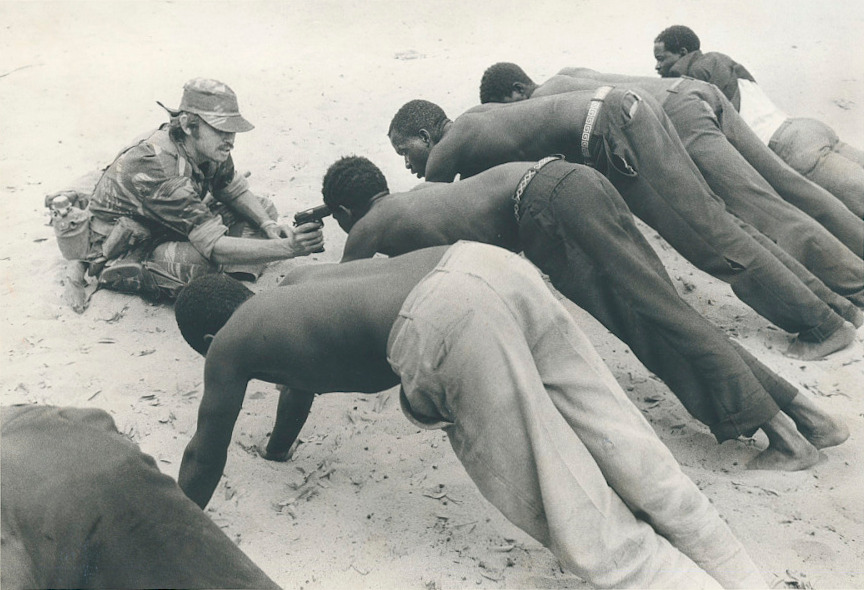
Humanists Zimbabwe holds that the same reasoning applies with equal force to the colonisation of our own country. From the 1890 occupation by the British South Africa Company through ninety years of settler rule to 1980, the people of this land endured:
- Violent dispossession of land through instruments such as the Land Apportionment Act (1930) and successor legislation, which confined the African majority to the poorest soils while ceding the most productive land to a small settler minority
- Forced and coerced labour regimes, hut and poll taxes designed to compel Africans into wage labour on settler terms
- Military suppression of resistance, from the First Chimurenga (1896–97) through the prolonged war of liberation that ended only in 1980
- Systematic exclusion from political representation, education and economic opportunity on the basis of race
- The deliberate erosion of indigenous governance systems, spiritual institutions and cultural knowledge.
These are not matters of interpretation but of documented historical record. If the “scale, duration, systemic nature, brutality and enduring consequences” of a crime are the standard by which the UN General Assembly judged transatlantic slavery to warrant reparatory justice, then ninety years of colonial rule in Zimbabwe, whose consequences continue to structure land distribution, wealth and opportunity in this country today meets that same standard and deserves the same seriousness of response.
Humanists Zimbabwe therefore calls for:
- Formal acknowledgement by the United Kingdom, as the colonising power, of the specific harms of the 1890–1980 period, distinct from and in addition to any general statements of regret already made
- An honest, evidence-based national and international dialogue on reparatory measures which may include financial redress, support for equitable development and institutional partnership conducted transparently and separately from present-day domestic political contestation over land, so that the pursuit of justice for colonial-era wrongs is not instrumentalised for contemporary partisan ends
- Restitution of cultural and historical artefacts removed from Zimbabwe during the colonial period and held in foreign museums and private collections
- Investment in truth-telling and historical education, so that Zimbabwean children learn the documented history of colonisation on the basis of evidence rather than either nostalgia or propaganda
Decolonisation Beyond Reparations: Correcting the Map, Correcting the Mind
On 4 September 2026, the UN General Assembly adopted the Togo-led “Correct the Map” resolution by a vote of 164 to 1, encouraging governments, schools and media to move away from the four-hundred-and-fifty-year-old Mercator projection – which renders Africa visually smaller than Greenland despite being roughly fourteen times larger – toward equal-area projections such as Equal Earth.
Togo’s Foreign Minister described the effort as “cognitive justice and memorial reparation,” rightly observing that a map does not change geography, but it does change how the world is perceived, taught and valued. Humanists Zimbabwe sees this resolution as a companion, not a footnote, to the reparations question. Colonisation was never only a matter of land and labour; it was equally a project of the mind, one that taught generations, in Zimbabwe and across the world, to see Africa as peripheral, backward and small. We call on Zimbabwe’s Ministry of Primary and Secondary Education to adopt equal-area map projections in the national curriculum without delay, joining Togo and France in this act of “cognitive justice,” and we urge Zimbabwean media and cartographic institutions to do the same.
Decolonisation, understood in humanist terms, is not a rejection of reason, science or international cooperation, it is their fullest application: an insistence that the evidence of history be confronted honestly, that human dignity be extended without exception to those it was historically denied and that both the material and the perceptual legacies of empire be corrected with equal seriousness.
Conclusion
Humanism holds no reverence for the past simply because it is past and no fear of it simply because it is uncomfortable. It demands only that we look at the evidence, weigh the enduring human consequences, and act with courage in the public square, precisely as the Ottawa Declaration asks of us. Ghana has shown the world one route to reparatory justice; Togo has shown another, quieter but no less significant, in the correction of the map itself. Zimbabwe’s own history of colonisation warrants the same rigour, the same evidence-based advocacy and the same international solidarity.
Humanists Zimbabwe commits to raising this agenda with the government of Zimbabwe, the African Union, Humanists International and our sister Humanist organisations across the continent and the diaspora, in the service of one humanist conviction: that justice delayed by a century is not justice denied forever, but it is justice still owed.
By Tauya Chinama
President, Humanists Zimbabwe