


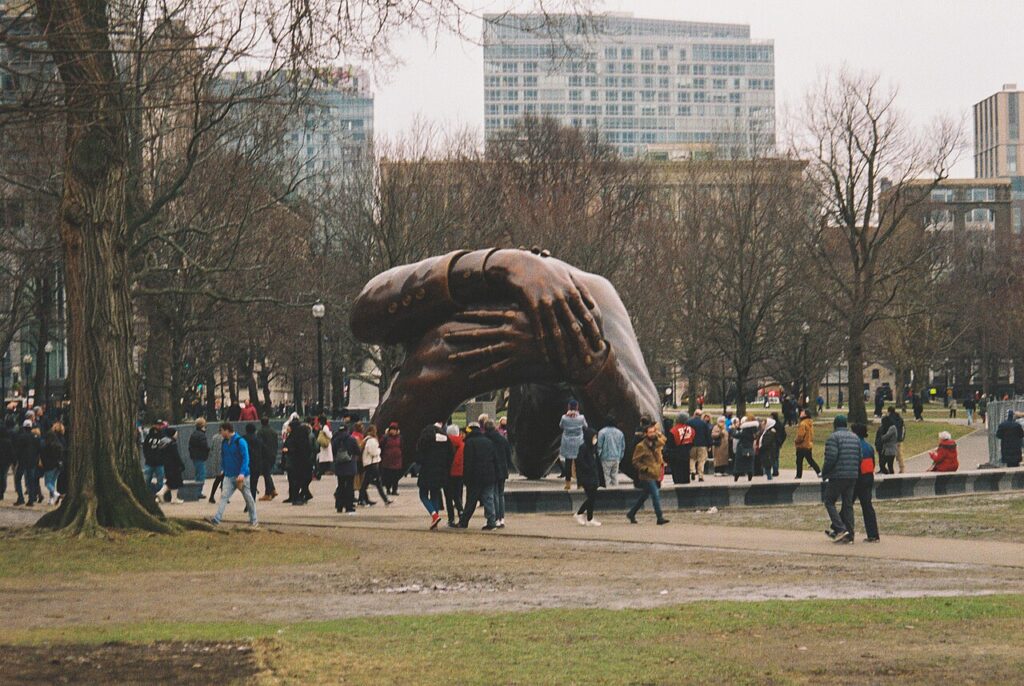
A Question to Humanity About Justice and LGBTQI Lives
Martin Luther King Jr. once put the principle in terms that reach far beyond the struggle in which he was personally involved:
“Injustice anywhere is a threat to justice everywhere.”
Dr. King used that principle when speaking about racial injustice and human solidarity, arguing that injustice in one place should concern people elsewhere. If that principle is true, then should the suffering of an LGBTQI person be dismissed simply because their struggle is not our own? If a person is attacked because of their identity, should we wait until the victim belongs to our own family before we care? If someone is denied dignity because they are a minority, should the majority remain silent simply because they themselves are safe?
Dr. King’s question becomes our question: What happens to justice when we decide that someone else’s injustice is none of our business?
Measuring justice
What if justice was measured by how we treat the least powerful?
Nelson Mandela spent his life confronting a system in which law and political power were used to divide people according to race. His legacy raises an important question for every generation: What is the purpose of law if it protects the powerful but abandons the vulnerable?
Mandela’s understanding of freedom was never simply about one person’s freedom. It was connected to the freedom of others. That is why human-rights struggles cannot be understood as isolated struggles. The person fighting racism, the person fighting sexism, the person fighting religious persecution is fighting for more than themselves.
And the person fighting discrimination against LGBTQI people is not asking society to create a special category of humanity. They are asking society to apply the principle of humanity consistently.
Caring for others
Human rights ask us to care about people whose pain may never become our own.
Coretta Scott King, who became a prominent advocate for LGBTQ rights despite criticism from some within the civil-rights movement, made the connection explicit when she said:
“I appeal to everyone who believes in Martin Luther King, Jr.’s dream, to make room at the table of brotherhood and sisterhood for lesbian and gay people.”
That sentence deserves to be remembered. Make room at the table. Not outside the table. Not behind the table. Not underneath the table. At the table. Where dignity is shared. Where voices are heard. Where humanity is recognized.
Dr. King Jr. said ” the moral arc of the universe is long, but it bends toward justice”. But an important question remains: Who bends it? History does not change by itself. People change history.
People who refuse to remain silent, who document injustice, who defend the vulnerable, who challenge discriminatory systems.
People who listen, forgive, speak, write, organise.
People who refuse to accept that cruelty is normal.
The scars of humanity
The scars of humanity may be deep, but scars do not have to be the end of the story. They can become evidence that a wound existed. They can become lessons. They can become testimony. They can become a reason to build something better. They can become reminders of what must never happen again.
And perhaps this is what justice ultimately asks of us. Not simply to punish wrongdoing, but to build a world in which fewer people have to suffer the same wound. The world does not need another generation of wounded hearts.
It needs people willing to listen, willing to heal, willing to protect. It needs people willing to say: Enough. Enough hatred, humiliation, violence, discrimination. Enough treating human beings as though their dignity is negotiable.
Because at the end of every argument about identity is a human being and every human being is a life. Behind every life is a story which may be a wound, and behind every wound may be a heart that is still waiting to be told:
You are human. You matter. Your dignity matters. Your life matters. And you deserve justice.
Justice for all, not just for some.
By Denis Nkyanungi