

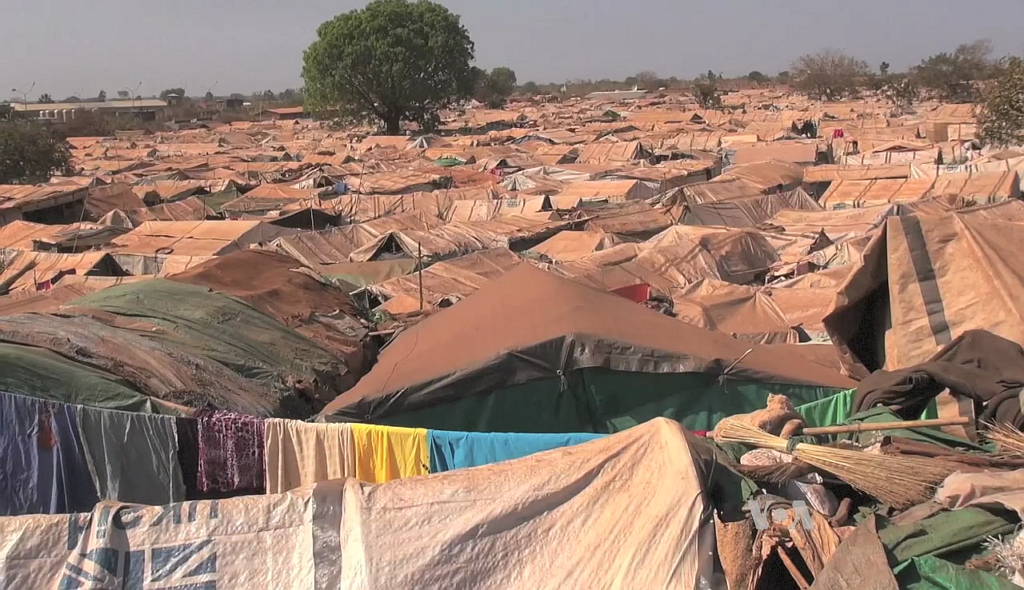
I write from beneath a corrugated roof in Gorom Refugee Settlement camp, where the wind rattles the sheets and dust settles into the seams of everyday life. At night, the camp becomes quieter, but uncertainty does not disappear. It remains with us.
In the past two weeks, our community has buried two people we knew and loved. Their absence can be felt in the places where they used to sit, in conversations where their names suddenly come up, and in the silence that follows. Their deaths have made me think again about what we mean when we talk about human rights.
Refugee life
For many of us in Gorom refugee camp, justice is not an abstract idea. It is practical and immediate. It means somewhere safe to sleep, medical treatment without humiliation, access to clean drinking water, the ability to report violence without becoming a target, and an asylum process that listens to our stories. Sometimes justice simply means being treated as a human being.
Our community is made up of LGBTQI+ refugees and asylum seekers from different countries and backgrounds. Among us are women and children, people living with HIV, people with disabilities, people struggling with poverty and people carrying experiences of violence and displacement. These realities often overlap. Someone may be LGBTQI+ and living with HIV. Another may be a woman caring for children while living with a disability. Someone else may be young, displaced and completely dependent on humanitarian assistance.
Poverty and food insecurity make everything harder. When people cannot afford enough food, ordinary illnesses become more difficult to manage. When clean drinking water is scarce, another layer of vulnerability is added. These problems reinforce one another.
Yet it would be wrong to describe refugee communities only through suffering. Every day, people find ways to survive. Someone shares food with a neighbour who has nothing. A person helps another refugee complete a form because they cannot read or write well. Someone accompanies a sick friend to a health facility. A mother looks after another woman’s child. Young people translate information for those who do not understand it. When someone dies, people gather.
These acts may never appear in official reports, but they matter. They remind us that displaced people are not simply recipients of assistance. We are also caregivers, organisers, teachers, translators, advocates and leaders.
The two deaths in our community have made that obvious.
Losing colleagues
Eduardo, 43yrs, from the Democratic Republic of Congo, was part of the leadership and representation of Congolese members of our community. Eduardo was found dead inside his own tent under circumstances that remain unclear to us.
Kayemba Augustine, 35yrs – pronoun they/them – was a human rights and LGBTQI+ advocate and community representative. Kayemba was found approximately two kilometres from our camping area. From the condition of the body, it appears that they may have been dead for around two weeks before they were discovered. No postmortem examination or medical finding has been shared with our community that could establish how they died.
Because our community has experienced hostility and threats from people opposed to the presence of LGBTQI+ refugees and asylum seekers in Gorom, some community members fear that Kayemba may have been harmed by others. Those fears cannot simply be dismissed, but neither can we claim to know what happened without an investigation and forensic findings.
People’s stories
Eduardo was not simply a Congolese refugee. Kayemba was not simply a person whose body was found away from the settlement camp. They were human beings whose lives had meaning. This is where I have come to understand justice differently. Justice is not only what happens after a crime. It is also whether people are treated as though their lives matter before tragedy occurs. It is whether people can seek protection when they are threatened, whether complaints are taken seriously, whether vulnerable communities can access healthcare, whether deaths are properly investigated and whether displaced people are treated with dignity.
One of the hardest parts of displacement is constantly having to explain yourself: Where did you come from? Why did you leave? What happened to you? Can you prove it? Why can’t you go back? I understand why authorities and agencies need to establish facts. But there is a difference between establishing someone’s circumstances and making that person feel as though their humanity is permanently on trial.
Some people flee without documents. Some experiences are difficult to prove. Some LGBTQI+ people spend years hiding their identities because revealing them was dangerous. Trauma does not always produce a neat story, and a person’s inability to provide perfect evidence should not automatically erase the reality of their fear.
Human connection
This is why refugee participation matters. People living at the margins often understand their communities in ways that outside institutions cannot. They know which services are difficult to reach, where discrimination occurs, which people are afraid to speak, and what support is actually needed. Humanitarian organisations and governments should not simply consult affected communities after decisions have already been made. Refugees should have meaningful opportunities to participate in decisions that affect their lives. This is not an argument against humanitarian systems. It is an argument for making those systems more responsive to the people they exist to serve.
But systems alone cannot replace human connection. When someone dies in a refugee settlement, grief must coexist with survival. You may mourn a friend in the morning and spend the afternoon looking for food, water or medicine. You may want to sit quietly with your grief but still have forms to complete, messages to answer and people depending on you. That is one of the cruel realities of displacement: grief does not stop the daily work of survival. Still, community can make that survival possible.
The humanist response
For me, this is where Humanism becomes real. Humanism is not only something to discuss in books or conferences. It becomes meaningful when human beings decide that another person’s suffering deserves their attention. We do not need to share the same nationality, religion, race, sexuality, gender identity or life experience to recognise another person’s humanity.
We cannot bring Eduardo or Kayemba back. We cannot answer every question surrounding their deaths. We cannot undo the pain carried by the people who knew them. But we can remember. We can ask for dignity in death as we ask for dignity in life. And we can continue insisting that LGBTQI+ refugees and asylum seekers are human beings whose lives deserve protection, healthcare, safety, investigation and respect. We want safety. We want dignity. We want a future.
The question is not whether queer refugees, people living with HIV, people with disabilities, women, children or other marginalised people deserve human rights. Those rights already belong to them. The question is whether we are willing to see them, listen to them and protect them while they are still here. Because every name we carry belongs to a person who once hoped for tomorrow. And everyone still here deserves the chance to reach it.
By Abraham Kasisi Jr.