






Modern day slavery is loosely described as a situation where one person uses power, coercion, threats, or lies to control and exploit another person for personal or commercial benefits, effectively stripping them of their freedom.
Types of Modern Slavery
Human trafficking: The movement, harbouring, or receiving of people for the purpose of exploitation
Forced labour: Being made to work for little or no money
Domestic labour: Forced to work within a home environment with little or no pay
Sexual exploitation: Coerced or forced into commercial sex work
Forced marriage: Being forced to marry someone without full consent, with most victims being women and children
Criminal exploitation: Forcing someone to break the law for someone else’s gain (e.g. begging or selling drugs)
Organ harvesting: The removal of organs for financial gain
Key characteristics
Coercion and control: Perpetrators use manipulation, violence, threats, or abuse to force people into specific activities
Loss of freedom: Victims have no choice about where or when they work, how long they work, or how they live their life
Exploitation: Victims are used, bought, sold, or traded like property. They are often paid little or nothing, and may have their identity documents confiscated
Global reach: It happens in every country and effects people regardless of gender or ethnicity. The International Labour Organization (ILO) estimates that 27.6 million people are in forced labour globally and that this generates an estimated $236 million annually.
Hidden in plain sight: Victims are often isolated, may show signs of physical or psychological abuse, live in poor condition, and be fearful of authorities
Causes of modern day slavery
Slavery results from a complex set of factors including poverty, unemployment, social norms that discriminate against women, institutional challenges, globalization, weak rule of law, wars, migration, and debt bondage.
Modern slavery is invariably linked to global capitalism through the relentless pursuit of cheap labour, low production costs and complex, opaque supply chains. While capitalism theoretically relies on free, negotiated labour, the demand for high profits often incentivizes slavery, as businesses exploit migrant workers, or a lack of regulation to minimize costs.
The effect on society
Undermining the rule of law: The operations of criminal groups compromise national and economic security and challenge the rule of law
Economic impact: Trafficking can result in significant remittance losses for countries of origin and create unfair competition through the use of cheap, forced labour
Public health risks: The spread of diseases like HIV/AIDS and other infections poses a threat to society
Disruption of families and communities: Families are broken apart and communities disrupted when members are trafficked, particularly women and children
Modern slavery in Africa
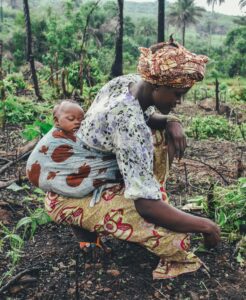
Modern slavery in Africa affects an estimated 7 million people primarily women and children. Of this total forced labour (3.8 million) and forced marriage (3.2 million) are the most common. Factors driving this slavery include extreme poverty, conflict, and weak governance.
Prevalence: Africa has the fourth highest prevalence of modern slavery in the world
Forms: The most common forms are forced labour – in agriculture, domestic work, construction – and forced marriage
Regional hotspots: Nigeria has a high number of victims – approximately 1.6 million
Modern slavery and gender
Modern-day slavery is a deeply gendered phenomenon, with women and girls comprising over 70 percent of the 50 million people estimated to be in modern slavery, including forced marriage and forced labour. Approximately 14.9 million women and girls are living in forced marriages .
Victims of modern slavery often face long-term physical, psychological and social problems. These include trauma, stigma and loss of reproductive autonomy.
Sexual exploitation: Women and girls account for 90 percent of victims .
Domestic Servitude: Women and girls are disproportionately represented in domestic servitude, often hidden in private homes where they are vulnerable to abuse
Forced labour (non-sexual): While men are more likely to be in a state of imposed forced labour, women are often trapped in debt bondage or forced to work in garment factories and in agriculture
Baby factories: In specific countries , such as Nigeria, young women are confined in illegal “baby” factories where they are forced to conceive and sell their babies
Drivers of modern slavery
Patriarchy: Entrenched gender inequality limits women’s access to education, financial resources, and legal protections
Economic disparities: Women are more likely to live in poverty, making them susceptible to fraudulent job offers
Cultural practices: Certain cultural practices such as early or forced marriage act as mechanisms of enslavement
Migration and displacement: Women and girls on the move are highly vulnerable to trafficking and exploitation
By Godfrey Selbar


