


The argument began innocently at a bar whilst discussing self-hate amongst Africans with an opinionated Christian acquaintance and how religion contributed to this (not a topic for today). I told him no human is special to other humans, but he insisted that Arabs hold a special place in God’s cosmic hierarchy as descendants of Ishmael, Abraham’s firstborn. When I challenged this, he pivoted: “Fine, but you must admit the Jews are God’s chosen people. The Torah and/or Bible says so explicitly.” I asked him why an all-powerful deity would choose one small tribe in ancient times over billions of other humans across history. His response was predictable: “God’s ways are mysterious. We cannot question divine wisdom.”
This conversation, repeated in variations across Nigeria and the world, reveals humanity’s most persistent delusion: that we, or our particular subset of humanity, are cosmically significant. Billions of humans organise their entire world-views around the belief that their race, religion, nation, or species occupies a privileged position in the universe. That an invisible deity specifically chose them above all others to receive special blessings, land, salvation, or favour.
No race is chosen. No nation is blessed by divine mandate. No gender is superior by cosmic design (but are unique). Humanity itself is not the crown of creation. We are unremarkable products of evolution on an average planet orbiting an ordinary star in an unexceptional galaxy. This reality, far from being depressing, is the foundation of genuine equality and human dignity. Once we abandon supremacist delusions, we can build ethics on what actually matters: our shared capacity for reason, suffering, and moral choice.
Claims to specialness
Judaism explicitly centres on chosen-ness. The Torah declares that Yahweh selected the Israelites above all peoples to be “a kingdom of priests and a holy nation.” This covenant, portrayed as unilateral divine favour rather than earned merit, forms the foundation of Jewish religious identity. Whether interpreted spiritually or ethnically, the claim remains: this group is special in God’s eyes.
Islam, whilst theoretically universal, carries its own supremacist assumptions. Muslims claim Ishmael, Abraham’s firstborn through Hagar, establishing Arab lineage as primordial. The Quran positions itself as the final, perfected revelation correcting the corrupted texts of Jews and Christians. Arabic becomes not merely a language but the tongue God speaks, the medium of divine speech. Non-Arabic Muslims must recite prayers in Arabic regardless of comprehension, affirming the language’s sacred superiority.
Christianity claims exclusive access to salvation. Jesus declares in the Gospel of John: “No one comes to the Father except through me.” This totalising claim renders billions of non-Christians, including those who never encountered Christian teaching, destined for damnation regardless of moral character. The early Church’s doctrine that Gentiles could be adopted into God’s chosen people through faith did not abandon exceptionalism; it merely expanded the club’s membership criteria whilst maintaining that those outside remain condemned.
The Nigerian experience
In Nigeria, these imported supremacies overlay indigenous ethnic chauvinism. Most Fulani and Hausa Muslims claim superior Islamic piety and heritage over other Muslims, especially the Yoruba Muslims and Muslims of minority ethnic groups. Many Fulanis even believe Nigeria is an estate of their ancestors and also believe that the spread of Islam in Hausaland by Uthman Dan Fodio makes them special Muslims and believe that leadership should reside within their group.
Igbo Christians invoke industriousness and entrepreneurial destiny as evidence of divine favour. Yoruba adherents, whether Christian, Muslim, or practitioners of traditional religion, assert cultural primacy and always claim that their prostration culture is synonymous with respect and therefore an evidence of cultural superiority. Each group marshals historical grievances and achievements as proof of their exceptional status. The result is endless jockeying for dominance, political instability, and periodic violence as competing exceptionalisms collide.
Perhaps most tragically, Nigerian Christians have adopted what might be called “Hebrew woman syndrome.” Pregnant women refuse medical interventions during childbirth, declaring they will “deliver like Hebrew women”, supernaturally protected by Old Testament blessings. The assumption is that because they worship the Hebrew God, they inherit the exceptional status of ancient Israelites. The result: preventable maternal deaths, dead infants, shattered families, all because religious exceptionalism convinced believers that modern medicine is for the “unfaithful” who lack divine protection. This also applies to religious adherents who rely on “faith healing” when medical expertise is needed and “divine provision” where family planning is needed.
The mechanics of delusion
Every holy book claiming divine authorship was written by humans asserting their group’s specialness. This is not coincidental. The Torah was written by Israelite priests. The Quran was revealed to an Arab prophet. The New Testament was compiled by early Christians. Hindu texts privilege Brahmin castes. The pattern is universal: those writing the scripture inevitably position themselves as divinely favoured.
The logic is circular and self-serving. How do you know you’re chosen? Because our holy book says so. Who wrote the book? We did. But surely God inspired it? How do you know? Because the book says God inspired it. The reasoning loops endlessly, never escaping its own assumptions.
This pattern extends beyond religion. Every civilisation creates myths of its own importance. Norse mythology promised Valhalla exclusively to courageous warriors, conveniently, Vikings. Egyptian religion positioned pharaohs as living gods; unsurprisingly, this doctrine emerged from Egyptian priests serving pharaohs. Roman ideology proclaimed destiny to rule the world—a narrative emerging from Rome itself. American “manifest destiny” declared divine right to continental expansion—a doctrine articulated by the expanding Americans.
These myths serve obvious functions: group cohesion and justification for dominance. “God chose us” translates practically to “we deserve what we take from you.” Exceptionalism provides moral cover for exploitation, conquest, and violence. If divine favour marks your group as special, then displacing, enslaving, or eliminating others becomes not merely acceptable but righteous—you’re fulfilling God’s plan.
Conclusion
I think back to that argument about chosen peoples and firstborns—two humans debating which ancient Middle Eastern tribe God favoured more, as if the answer mattered, as if it affected anything beyond our egos. We waste our brief existence on this planet arguing over bronze-age tribal myths instead of solving actual problems: poverty, disease, violence, ignorance. We organise societies around whose ancestors were more special to a deity whose existence remains entirely unproven.
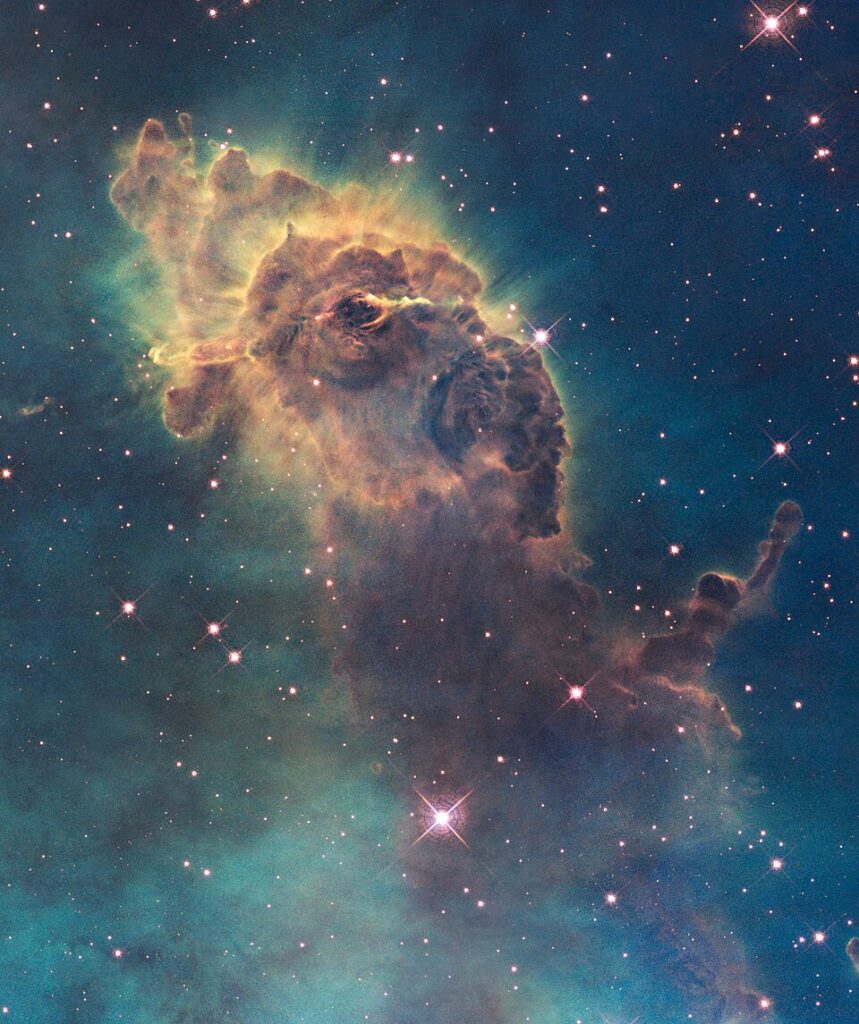
Zoom out. We’re apes on a rock orbiting a star in a galaxy amongst billions. No cosmic force cares which primate tribe controls Jerusalem, Mecca, or Rome. The universe is indifferent to our egos, our delusions, our cruelty, our beliefs, our conflicts, our claims, our suffering. We are not the centre. We are not special. We are not chosen.
This realisation is not depressing; it is liberating. Once you accept that no race is chosen, no nation is inherently blessed, and humanity itself is not cosmically special, you become free. Free from the burden of living up to divine expectations that never existed. Free from the delusion that your suffering is cosmically meaningful. Free from judging others by arbitrary hierarchies invented by humans claiming divine authority.
And you become free to create meaning through reason and compassion, to build just societies based on evidence rather than myth, to extend dignity to all humans equally, and to take responsibility for Earth’s future. No deity will save us from climate change, nuclear war, or our own stupidity. We are responsible.
The only thing special about humans is what we choose to become: educated or ignorant, compassionate or cruel, rational or dogmatic, cooperative or tribal. We are not chosen; we are responsible. That responsibility begins with abandoning the supremacist delusions that have drenched human history in blood.
No one is chosen. We are all equally unremarkable. And in that equality lies our only hope for genuine and lasting peace.
By Kenneth Eze