

By Abraham Kasisi Jr.
A country can hold elections while its citizens live in fear. Its leaders can speak in the name of the people while denying them the freedom to question those who govern them.
This contradiction lies at the heart of the debate about democracy and dictatorship: the difference between claiming political legitimacy and earning the trust of the people. Constitutions, election results and political promises matter, but a government’s true character is revealed by how it treats those who challenge its authority, disagree with the majority or lack the power to defend themselves.
Democracy means more than voting. It requires independent courts, a free press, meaningful political competition and the freedom to organise without fear of imprisonment or violence. Elections lose their democratic value when opposition candidates cannot campaign freely, journalists are intimidated, peaceful protesters are attacked and citizens fear speaking openly about their government. Yet not every struggling democracy is a dictatorship. Political systems have different histories and institutions, and their shortcomings must be examined carefully rather than reduced to convenient labels.
East African Examples
Uganda, Rwanda and Kenya illustrate three different experiences of political power in East Africa.
Uganda continues to hold multiparty elections, but the long dominance of President Yoweri Museveni’s government, restrictions on opposition activities and pressure on journalists and civil society have raised serious concerns about whether political competition is genuinely free and fair.
Rwanda, which has made significant progress in reconstruction since the 1994 genocide, maintains a tightly controlled political environment in which opposition figures and independent voices face serious restrictions.
Kenya has a more competitive electoral system, with courts, civic organisations and public protests providing important avenues for challenging those in power, although police abuses, attacks on protesters and failures of accountability remain troubling.
These countries should not be treated as identical, but their experiences raise a common question: what does political participation mean when citizens cannot exercise their freedoms on equal terms? A government does not become democratic simply because it holds elections; it must also respect the people whose votes give it authority.
Governing Without Limits
The danger begins when leaders mistake electoral victory for permission to govern without limits. A majority can choose a government, but it cannot legitimately strip minorities of their rights or silence citizens who voted against it. Elections confer authority within a constitutional framework; they do not give anyone ownership of the people. When criticism is treated as betrayal, journalism becomes an enemy activity and peaceful protest is portrayed as a threat to national security, democracy begins to lose its substance. The ballot box should allow people to change their leaders, not become a shield behind which leaders escape accountability.
In Sudan, decades of authoritarian rule ended with the overthrow of Omar al-Bashir in 2019, following years of public resistance and demands for civilian government. Yet the transition was undermined by military power struggles, and the war that erupted in April 2023 between the Sudanese Armed Forces and the Rapid Support Forces brought mass displacement, hunger and grave abuses against civilians. The people who risked their lives demanding freedom have been forced to fight for survival amid a conflict they did not choose.
South Sudan, which gained independence in 2011, has also struggled to turn the promise of self-determination into lasting peace, accountable government and democratic stability. Its first national general elections since independence are scheduled for 22 December 2026, following repeated postponements. The announcement of an election date is significant, but it does not by itself guarantee a credible democratic transition. Questions remain about security, political participation, electoral preparations and the conditions under which competing candidates and parties can operate.
For a country marked by conflict and humanitarian crises, the responsibility is not merely to conduct a vote but to ensure that citizens can participate meaningfully and that the outcome commands public confidence. Meanwhile, displacement, interrupted education, lost livelihoods and limited access to essential services continue to shape ordinary lives. For refugees and asylum seekers, political instability is not an abstract dispute between rival leaders; it can determine whether families remain together, children attend school and people have access to medicine and safety.
Ethiopia presents its own challenges, shaped by federal tensions, ethnic divisions, armed conflict and disputes over political authority. These conditions cannot be explained by a single leader or a simple division between democracy and dictatorship. They reflect deeper questions about how a state accommodates diversity, resolves disputes and protects civilians when political competition turns violent.
Burundi, too, has experienced political repression and contested transitions. Across these different settings, a troubling pattern emerges: when institutions cannot resolve political disputes peacefully, ordinary people are left to bear the consequences through insecurity, displacement, economic hardship and the loss of loved ones.
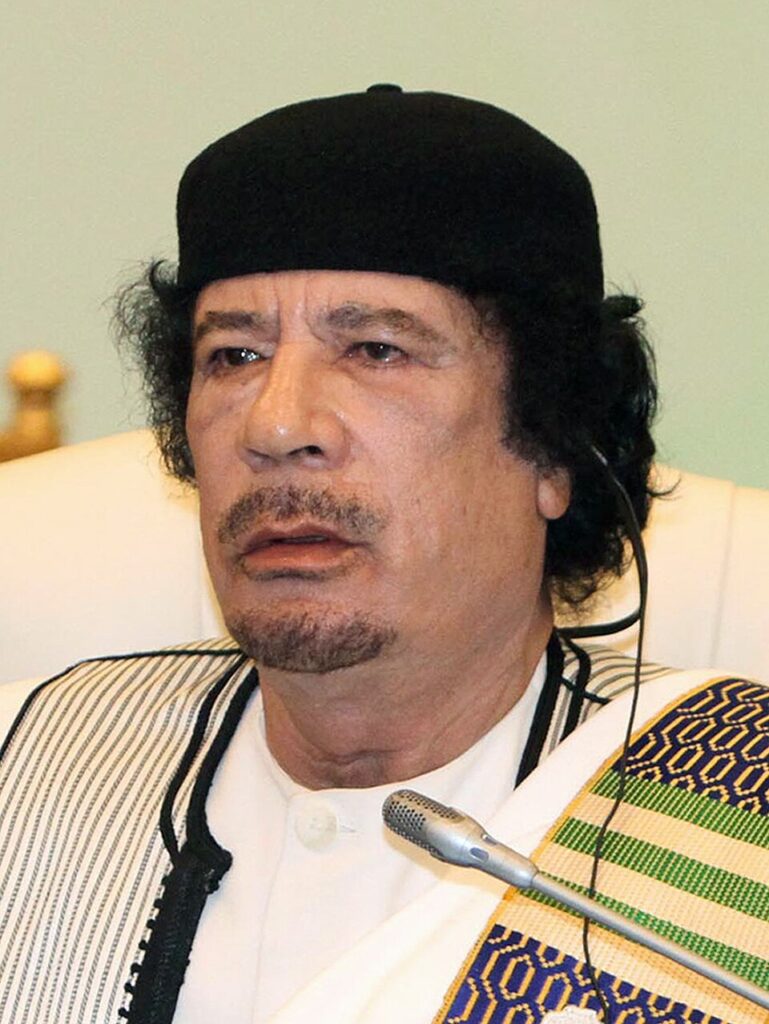
Libya offers a particularly important African example of the danger of concentrating power and the difficulties of rebuilding institutions after authoritarian rule. Muammar Gaddafi governed for more than four decades, presiding over a political system that left little room for independent opposition. His overthrow in 2011 did not lead to a stable, inclusive democracy. Instead, competing authorities, armed groups and foreign involvement contributed to prolonged fragmentation and insecurity. The lesson is not that people should accept authoritarian rule because change can be dangerous. It is that removing a ruler, however powerful, is not the same as building institutions that protect rights, settle disputes and hold future leaders accountable.
Marginalised Communities
For marginalised communities, the failure of political accountability can be especially dangerous. LGBTQI+ people may face discriminatory laws, social hostility and violence, while political leaders sometimes exploit prejudice to portray minorities as threats to national culture, religion or morality. In Uganda, the Anti-Homosexuality Act of 2023 intensified an already hostile legal environment for LGBTQI+ people and drew international condemnation. When the state fails to protect people equally, identity itself can become a source of vulnerability. A person’s ability to find housing, obtain healthcare, maintain family relationships or speak honestly about their life may depend on whether their identity is accepted by those around them. Political decisions that appear distant from everyday life can determine whether someone lives openly or conceals an essential part of themselves to survive.
I understand the consequences of displacement not only as a subject of political analysis but through lived experience. Moving across borders in search of safety reveals how uncertain the promises of citizenship and protection can become. Refugees often bear the consequences of decisions in which they had no voice. They leave behind homes, relationships, work and familiar surroundings, only to encounter new systems where legal documentation, recognition and access to basic services may remain difficult to secure. Their experiences expose a profound failure of political power: when institutions fail to protect people, the burden falls most heavily on those with the fewest resources to withstand it.
Writers, journalists, activists and human rights defenders face another expression of the same problem. Their work can expose abuses that powerful people would rather conceal, yet speaking openly can invite intimidation, censorship, detention or retaliation. Freedom of expression is not merely a privilege for those who enjoy debate; it allows societies to expose wrongdoing and challenge the misuse of authority. When people become too afraid to report what they witness, the public loses more than information. It loses one of its strongest means of holding power accountable.
Humanism offers a clear standard for judging political systems. It places human dignity, reason, compassion, freedom of conscience and equality above loyalty to political leaders or inherited authority. Rights should not depend on religious belief, sexual orientation, gender identity, ethnicity or political affiliation. Governments may reflect the values of a majority, but they remain responsible for protecting those who disagree. A political system that protects the majority while abandoning minorities cannot claim to uphold equal human dignity.
Conclusion
The question is not whether democracy is flawless or whether elections can resolve every political crisis. It is whether political power remains answerable to the people whose lives it shapes. Public trust becomes possible when citizens can challenge their leaders without fear, minorities receive equal protection, wrongdoing can be exposed and those responsible for abuses can be held to account.
The true measure of political power is not how long a leader remains in office, how confidently a government speaks in the people’s name or how successfully a state projects its strength. It is whether someone with little influence can live without fear, speak without being silenced and seek justice without being punished for asking. When a political system cannot protect that person’s dignity, the problem is not simply a failure of governance; it is a failure to recognise the very people in whose name power is exercised.
By Abraham Kasisi Jr.