


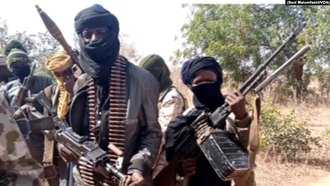
Three weeks ago, on Palm Sunday, gunmen stormed Angwan Rukuba, a mostly Christian neighbourhood in Jos, Nigeria. They killed at least two dozen people—reports from the ground put the toll far higher —firing on residents and hacking others to death with machetes as they celebrated one of Christianity’s holiest days. The attack fits a grim pattern: violence that spikes during Christian observances, in communities long identified as Christian.
The next day, The New York Times published an article titled “Palm Sunday Attack in Nigeria Leaves at Least 12 Dead”. It reported the deaths but then pivoted to a familiar refrain. It described Republican lawmakers as having “falsely claimed that there is a Christian genocide happening in Nigeria”. Analysts, the paper assured readers, say the situation is “much more complex” and that “Nigerians of many faiths have been killed”. The violence, it concluded, is “fuelled by criminals, rather than religious or ethnic tensions”.
I wish that framing were true. It would be simpler, cleaner, and less uncomfortable. But it is not. I know because I went to Plateau State myself.
In June 2024, I travelled to Jos, Barkin Ladi and Bokkos — the epicentre of some of the worst anti-Christian violence in Nigeria — to assess the situation for myself. I did not rely on briefings in air-conditioned hotels in Abuja, New York or Washington, DC. We drove the rutted roads under the cover of a heavily armed military convoy as escort, walked the burned-out villages, and sat with survivors in the places where the killings happened. Along with my team, we shot a documentary at the very sites of the Christmas Eve and Boxing Day massacres of 2023 — attacks that left nearly 300 Christians dead in Bokkos and Barkin Ladi. We spoke with widows who watched their husbands shot in front of them, with children who hid while their churches burned, and with pastors whose congregations had been decimated.
What we saw was not random banditry. It was systematic. The attackers — widely identified by survivors, local officials, and human rights groups as Fulani militants — targeted Christian farming communities. They burned churches, not mosques. They struck on Christmas, Eastertide, and now Palm Sunday. They left shouting slogans invoking jihad. And they promised to return the next day on Boxing Day. And they did! This time to destroy the remaining foodstuff in their granaries to ensure they would have nothing to eat. The pattern is unmistakable to anyone willing to look.
The security forces were conveniently absent. They only showed up hours after the attackers had left, despite being given prior information of the looming, premeditated attack.
The New York Times is right that Nigeria’s security crisis is complex. Climate change has strained resources. Criminal gangs exploit chaos. Old ethnic grievances linger. But complexity does not erase the religious dimension — it compounds it. For more than a decade, international monitors including Open Doors International , United States Commission on International Religious Freedom , and International Christian Concern have documented that Christians in Nigeria’s Middle Belt suffer disproportionate violence precisely because of their faith. Thousands have died. Hundreds of churches have been destroyed. Entire communities have been displaced.
When the victims are overwhelmingly Christian and the perpetrators invoke Islamic supremacist ideology, it is not “criminality”. It is persecution.
As a matter of fact, Gregory H Stanton of Genocide Watch has explicitly argued that Nigeria has reached the final stages of his Ten Stages of Genocide model. Stage 9 (Extermination): Stanton points to the systematic nature of the attacks on Christian villages during holy days as evidence that mass killing is actively occurring. Stage 10 (Denial): He argues that the Nigerian government and certain international media outlets participate in this stage by dismissing religious motivations and categorising the violence as mere “farmer-herder clashes” or “criminality”.
I asked survivors in Barkin Ladi what they feared most. It was not “crime”. It was the next coordinated attack timed to their holiest days. I asked local Christian leaders why the Nigerian government’s response has been so slow. Many pointed to a reluctance in Abuja to name the religious motivation, lest it inflame tensions or embarrass the administration. That reluctance has now been echoed in Western newsrooms.
Labelling this violence “criminal”, rather than calling it what it is, does a disservice both to the dead and to the living. It comforts those who would rather not confront the reality of religious extremism in the 21st century. And it signals to the perpetrators that the world is not watching — or worse, that it does not care.
During my visit, we were shown the graves of the massacred. The villagers told us they were being erased not only for their land but also for their faith. After all, what has a herdsman got to do with chanting ‘Allahu Akbar’, charging at churches, and burning them down? The documentary we produced captures those testimonies in the survivors’ own words. I invite The New York Times reporters and analysts to watch it. I invite them to return with me to Bokkos, Barkin Ladi, and Jos.
The United States cannot solve Nigeria’s problems. But we can stop pretending they are something they are not. We can condition security assistance and diplomatic engagement on concrete steps to protect vulnerable religious minorities. We can speak plainly about what is happening so that the Nigerian government feels the pressure it needs to act. And we can refuse to let fashionable narratives in newsrooms obscure the blood in the streets.
Denying the reason will not stop the bleeding. Acknowledging it is the first step towards demanding that it end.
By Kola Alapinni
Kola Alapinni is an international human rights lawyer and recipient of the U.S. Secretary of State’s International Religious Freedom Award. He has defended victims of blasphemy laws in northern Nigeria and advocates globally for freedom of religion or belief.