








People often imagine modern slavery as something that happens in secret: in locked rooms, in distant brothels, in hidden factories. Human trafficking is portrayed as a dark underworld run by organized criminals.
Exploiting refugees
But for many refugees in East Africa, exploitation does not hide in the shadows. It exists in the open, woven into the very routes of survival. It is present at border checkpoints, in refugee camps, in the hands of smugglers, and even in the institutions meant to protect us. It is not always marked by chains or cages. Sometimes it looks like a bus ticket, a border crossing, a promise of safety, or a demand for money that you cannot refuse.
For LGBTQI+ refugees, these journeys are even more dangerous. Visibility can mean exposure. Exposure can mean violence. There is constant fear of being outed, harassed, or assaulted not only by traffickers but sometimes by those meant to enforce the law. This is how modern trafficking operates not always through chains, but through systems of dependency, coercion, and fear.
Across East Africa, displacement has created informal systems where movement is controlled not by law, but by power, money, and vulnerability. Within these systems, trafficking and modern slavery are not isolated crimes; they are embedded in the everyday experiences of refugees. The blurred line between smuggling and trafficking becomes clear when a voluntary agreement turns into coercion. Payments increase unexpectedly. Conditions worsen. Threats emerge. At this point, smuggling begins to resemble trafficking. People are forced to pay additional fees under threat, detained or abandoned if they cannot pay, and subjected to coercion, intimidation, or violence. The journey becomes one of survival under control, rather than movement by choice.
Beyond East Africa
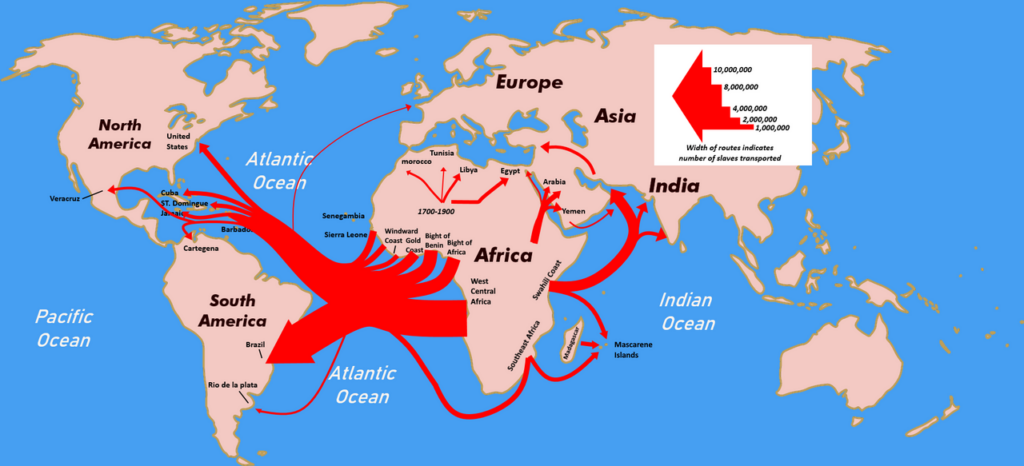
Beyond East Africa, modern slavery takes other forms that mirror the same patterns of vulnerability and exploitation. Labour trafficking to the Gulf has become a major issue for migrants from Uganda, Kenya, and Tanzania. Recruitment agencies promise good jobs, but many migrants end up in forced domestic labour, with confiscated passports, unpaid wages, and conditions amounting to slavery. Some never return home.
Organ trafficking has also been documented, with victims from Africa ending up in countries such as Thailand, Malaysia, Russia, and China. Kidneys are the most commonly trafficked organs. Some victims are coerced; others are deceived; some are killed.
Women, girls, and LGBTQI+ individuals are disproportionately targeted for sexual exploitation. For refugees, “survival sex” becomes a coping mechanism in the absence of protection and resources. Modern slavery thrives because the global economy rewards cheap labour. Migrants from East Africa are used in construction, domestic work, agriculture, and manufacturing. Their exploitation is hidden behind the products the world consumes.
From a humanist perspective, the existence of such systems raises urgent ethical questions. If all human beings have equal dignity, why are some forced to risk exploitation to survive? If rights are universal, why are they not accessible in practice? Human trafficking and modern slavery in refugee movements are not only criminal issues, they are moral failures. They reflect a gap between principles and reality. They expose the distance between what we claim to value and what we allow to happen.
Addressing these issues requires more than isolated interventions. Safe and legal migration pathways must be expanded. Border accountability must be strengthened. Anti-trafficking measures must be integrated into refugee protection. Refugee-led initiatives must be supported. Those with lived experience are best positioned to identify risks and solutions.
Modern slavery and human trafficking are not always visible in chains or confinement. In many cases, they exist within systems that appear ordinary border crossings, transit routes, refugee settlements. Recognizing these systems is the first step toward change.
The question is not whether they exist. The question is whether we are willing to confront them.
By Kasisi Abraham Jr.


