


Decoloniality forces us to make deeper inquiries than decolonization. It requires us to ask questions like: Whose language dominates institutions and education? Who has power to define which knowledge is legitimate? Whose experiences guide development models? And, more importantly, whose history is taken as being universal history? These are necessary questions because colonialism has done more than just shaping economic and political ideas. It has shaped the very production of knowledge.
Epistemic liberation
Epistemic liberation is one of the central ideas in decolonial thought because the colonizer always put forward their knowledge as being universal. At the same time the colonizer portrays the knowledge systems and intellectual traditions of the colonized as primitive or inferior. This has led to the production of what some scholars call “epistemicide” – the deliberate marginalization or destruction of indigenous knowledge systems. Epistemological liberation means breaking the colonizer’s chains and challenging the claim that knowledge comes only from the colonizer.
Epistemic liberation doesn’t mean rejecting the exchange of ideas internationally, rejecting science or becoming opposed to reason or to modernity. It means contesting the assumption that legitimate knowledge always comes from somewhere else. African people have important philosophies, cultural practices, ecological knowledge and intellectual traditions that are capable of contributing positively and meaningfully to the thought of humanity. African oral traditions, environmental management and communal ethics continue to provide valuable insights for modern society.
The African experience
It is a mistake for Africans to borrow development models and policy frameworks from the outside world without first taking a surgical look at local realities. Educational institutions contribute to this mess by promoting intellectual dependency rather than rewarding Africans who generate original ideas based on African experience. This means that the continent continues as a knowledge consumer, not a knowledge producer. Africa cannot solve its problems and realise its potential while relying on frameworks constructed elsewhere.
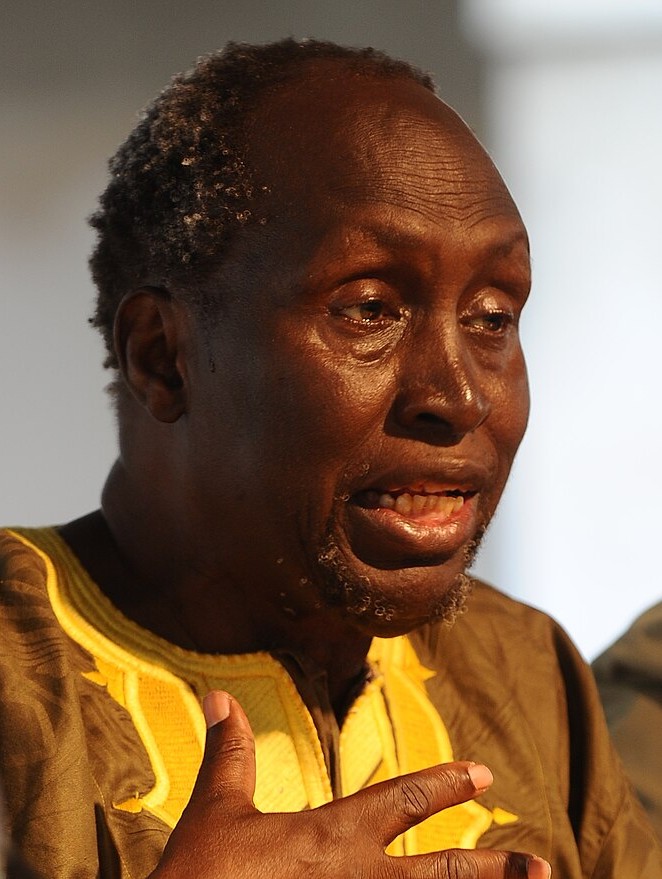
Colonial languages remain dominant in elite communication, education and administration. Despite the role of these languages in enabling transcontinental communication, dependency on them reinforces inequality and promotes the marginalization of indigenous languages. As Kenyan revolutionary writer Ngũgĩ wa Thiong’o said, languages carry the identities, worldviews and memories of whole peoples. Epistemic liberation insists that the intellectual and linguistic dignity of the continent’s languages be recognised.
Africa has one of the youngest populations in the world. This presents both risks and opportunities. Large undereducated youth populations can result in frustration and instability. But youth empowered by education, technology and institutional inclusion can be highly transformative. While young Africans are becoming more and more connected through cultural production, digital technologies and entrepreneurship, this is not liberatory in itself. The continent must go beyond merely consuming technologies produced elsewhere and become her own producer of knowledge, research and innovation.
Africa’s liberation movements changed world history when they ended colonial rule. But gaining political independence did not do away with the intrenched structures built by colonialism. Colonial dominance persists through education, governance institutions, hierarchies of knowledge and economic organisation. This is why Africa needs to move from decolonization to decoloniality.
Africa’s future does not solely depend on remembering the history of past anti-colonial struggles. It depends on empowering societies so they can strengthen their institutions, produce valuable knowledge, build intellectual confidence and encourage innovation. Epistemic liberation is an essential condition for the continent’s development. It’s not just an abstract academic idea.
By Cde Mohammed Yagoub