


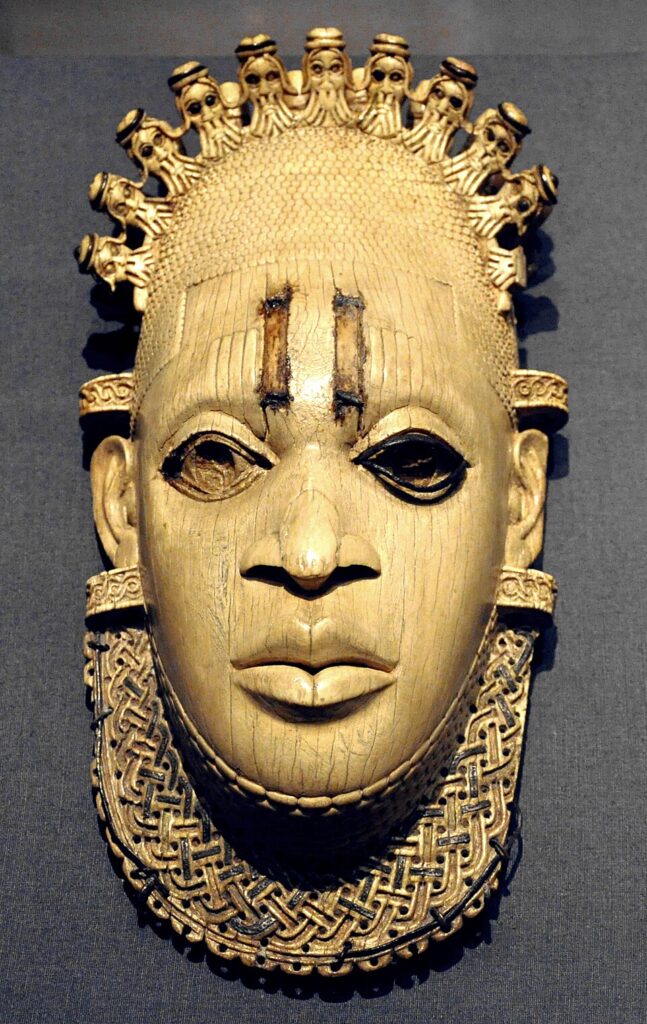
In his article, “What Else Was Stolen When Africa’s Artefacts Disappeared?,” Kenneth Eze masterfully diagnoses a profound historical wound. He is absolutely right in his assessment of colonialism’s intangible losses: the erasure of indigenous knowledge systems, the disruption of cultural continuity, and the trauma of colonial extraction are undeniable facts of history.
I am not debating Eze’s premise that colonialism robbed us of our history and cultural continuity. What I am debating is the flawed, emotionally driven solution that modern advocates deduce from this history: the blind demand for the physical return of artifacts to contemporary African states.
This “bring back our artifacts” movement is often treated as unquestionable moral gospel. However, a critical examination reveals a foundation built on emotional idealism rather than historical, psychological, or socio-economic pragmatism. By romanticizing the past, we are deliberately ignoring the uncomfortable realities of the present.
The Preservation Paradox
A primary tension in the restitution debate lies in the bitter irony of the 1897 British Punitive Expedition. While the looting of Benin City was an act of brutal imperial violence, the technical brilliance of the Benin Bronzes ensured they were treated by the British as high value assets rather than disposable “pagan” idols.
Had these works remained In West Africa during the peak of 19th- and 20th-century Christian and Islamic evangelism, they would likely have met the same fate as countless traditional wooden sculptures and shrines: the bonfire. Evangelists systematically viewed these items as “spiritual blockages” to conversion. Even today, what happens when a traditional ruler converts to a fundamentalist sect and is told to purge items associated with witchcraft?
The physical survival of these historical records was inadvertently secured by European greed, which shielded them from indigenous religious iconoclasm.
Mimetic Desire and the Expiration of Tools
A significant flaw in the restitution argument is the projection of European museum culture onto Nigerian history. Western museums are built on a tradition of static, archival display. Historically, however, the vast majority of African artifacts were never viewed as “art” in this European sense; they were functional tools.
Like swords, axes, or hammers, these items possessed specific spiritual or administrative utility. Once that utility expired—or the ritual was complete—the items were routinely discarded, left to decay in ancestral homes, and replaced with new ones.
This utilitarian approach is entirely practical. An old Bible holds sentimental value, but its existence does not stop the printing of new Bibles. A car factory values the engineering knowledge required to build cars far more than it values a single vintage vehicle off its assembly line.
If Europeans had not placed these items behind glass and labelled them “masterpieces,” would modern Africans even want them back? The demand is largely driven by “mimetic desire” or “green grass syndrome”—like a child on a playground who only wants a toy because another child is holding it. Without European intervention and valuation, these pieces would have been naturally discarded for more functionally relevant ones. Once the political victory lap of their return is completed, the danger is that desire evaporates, leaving the items to collect dust.
The Maslow Problem
Beyond the philosophical flaws lies a glaring moral disconnect. How does one explain to a starving African citizen that building a state-of-the-art, climate-controlled museum is in their best interest?
The reality of modern Nigeria is one of severe economic hardship. Funnelling millions into the repatriation and housing of ancient art—often requiring European financial assistance for maintenance—while neglecting the pressing needs of the living is a gross misallocation of state priorities.
By neglecting the very youth who suffer under economic stagnation, the state risks building monuments that will eventually become targets. It is not difficult to envision a future where these multi-million-dollar archival facilities are vandalized or destroyed by a frustrated, disenfranchised youth population protesting a government that values the bronze dead over the starving living.
Cultural Hypocrisy
This economic disconnect is worsened by the glaring insincerity of many prominent restitution advocates. Often, the loudest voices in this movement belong to the political and academic elite. They wear Western clothes, utilize Western technology, speak in Western tongues, and educate their children in Western institutions.
Many actively participate in the “Japa” wave—emigrating to enjoy the security, infrastructure, and opportunities of Western societies—all while loudly demanding “freedom” from Western cultural imperialism back home. For this demographic, the return of artifacts is an arbitrary political victory: a nationalist talking point that requires no actual sacrifice or systemic reform.
The Universalist Paradigm
If these artifacts are returned only to sit in an underfunded, abandoned museum so a local governor can parade his European friends around during state visits, true restitution has failed.
If Africans truly want to demonstrate deep cultural care, the focus must shift from fighting exclusively over the static products of the past to empowering the genius of the living. Nigeria is home to brilliant contemporary artists whose work frequently goes underappreciated locally, sustained instead by the same foreign markets that hold the ancient artifacts.
Ultimately, an artist’s creation—especially an ancient masterpiece whose creator has long passed—transcends its original utility. It no longer belongs exclusively to a modern political state or a specific tribe. True art belongs to humanity. It is meant to be studied, debated, and, above all, seen. Currently, that universal visibility is best facilitated on a global stage— preserving the legacy of African genius for the world.
The Export of Genius
Where does a thing truly belong? With its birthplace, or with those who recognize its worth? The uncomfortable truth this debate forces upon us is that Europe did not merely steal African artifacts—it inadvertently became their curator, their archivist, and their loudest advocate. For over a century, European institutions have preserved what African iconoclasm would have burned, studied what African indifference would have discarded, and valued what African rulers themselves once treated as disposable ritual tools.
This is not to excuse the violence of extraction. It is to recognize that violence and preservation can coexist in historical irony. The Benin Bronzes today generate more reverence in Berlin and London than they would generate in a neglected Lagos museum guarded by underpaid security personnel with no climate control. They are seen by millions annually—schoolchildren from Osaka to Oslo encounter African genius and are forced to revise their assumptions about a continent they were taught was “primitive.” This is not theft anymore; this is inadvertent cultural diplomacy.
These artifacts should be viewed not as stolen property awaiting return, but as Africa’s oldest and most successful exports—commodities of genius that transcended their local utility to conquer the global imagination. A Yoruba carving in the British Museum is not a hostage; it is an ambassador. A Benin Bronze in Berlin is not loot; it is proof that before Europe’s industrial revolution, African hands had already mastered the art of immortality.
The pride of Alkebulan should not be measured by how much we can drag back to our shores, but by how far our genius has traveled without permission. Greek marbles grace museums from Rome to Los Angeles, and Greece does not demand them all back—because Greece understands that its civilization became universal precisely because its artifacts escaped its borders. Egypt’s obelisks stand in London, Paris, and Rome, yet Egypt’s identity remains unshaken.
When African art hangs in the Louvre or the Metropolitan Museum of Art, it forces the world to confront a truth it has long resisted: that Africa was never the “dark continent” of colonial imagination, but a cradle of sophistication whose artists worked in bronze while Europe worked in wood.
Let Europe keep them. Let Europe maintain them. Let Europe explain to its own citizens why the greatest treasures in its museums were created by people whose descendants it now confines to refugee camps and deportation flights. The artifacts, in their silent eloquence, become permanent witnesses against the very societies that hold them. The demand for return is not restitution. It is vanity dressed as justice.
By ESS Donli