









The question of restitution lies within a larger debate about power, cultural memory, and postcolonial justice. While the return of African artifacts is perceived to be a favour, an acknowledgement of the historic injustice will help return to Africa sovereignty over African memory, history, and heritage.
The ownership of heritage culture is no longer a subject limited to quiet discussion in the corridors of Western museums. It has become one of the defining political and ethical battles of the 21st century. African scholars, communities and governments are laboriously – but aggressively – demanding the return of artefacts and antiquities stolen during centuries of imperial conquest, missionary intrusion, punitive raids, and colonial occupation.
These artefacts include bronzes, sculptures, sacred objects, manuscripts, drums, textiles, thrones, and archaeological treasures. These are not mere ornaments confined in glass cases. They are the human faces, organs, and blood of the lived history of culture and nation. They are the archives of Africa – archives of scientific achievements, art, religion, and history. The loss of these treasures is a cultural disruption – it ends narratives, blocks the advancement of knowledge, and takes away the right of Africans to narrate their own history.
The Historical Roots of Cultural Plunder
Very many cultural heritage artifacts were taken from Africa by force.
One of the most shameful examples was the 1897 British Punitive Expedition against Benin. During this invasion the British burned Benin City to the ground, exiled the Oba, and seized between 3,000 and 5,000 objects – bronze plaques, ivory tusks, royal ancestral heads, carved artifacts, and ritual objects. These treasures are now located in museums in London, Berlin, Vienna, New York, and Cambridge.
In 1868 British troops invaded Ethiopia, laid siege to Magdala, and carted off manuscripts, crowns, crosses, ceremonial clothing, royal locks of hair, and archaeological treasures. The British also raided the Asante empire and took treasures from the royal compound such as gold regalia, royal stools, and sacred items. In Congo, Belgian administrators and missionaries extracted countless artifacts on the pretext of “ethnographic study,” often coercing or threatening local communities as they did so. French colonial officers in West and Central Africa looted masks, sculptures, and religious objects – the “trophies” of conquest.
The colonial regimes allowed the plunder of archaeological artifacts. Arrogant European explorers and anthropologists took away artifacts with little or no local consent, claiming scientific authority – with an air of racial superiority. Archaeological sites in Egypt, Sudan, Nigeria, Niger, and Tanzania were destroyed. Missionaries convinced communities to release their sacred objects by calling them “paganistic.” And colonial administrators pushed indigenous political structures into submission by attacking their culture. By the mid-twentieth century, a significant number of the continent’s most precious cultural treasures had been removed to the British Museum, the Musée du Quai Branly, the Humboldt Forum, the Metropolitan Museum of Art, and the Louvre.
The Question of Ownership
During the pre-independence period, Western museums and galleries constructed narratives that justified the looting of African art by colonial powers. African societies were labelled as backward, chaotic, and unable to protect their own heritage. Meanwhile, museums depicted themselves as the saviours of Africa’s heritage from “destruction” or “oblivion.”
The concept of the “universal museum” is at the heart of this evaluation. The British Museum, the Louvre and other such institutions claim that cultural objects and their history are part of a common human heritage and that there will only be a real global understanding of them if the artifacts are conserved in Europe.
However, this argument obscures the fact that the artifacts were acquired by force. Africans did not willingly allow their heritage to be put into a category that was simply handed down to them. The very principle of universalism itself rests on the colonial bedrock. European museums shelter “global” culture by overriding the claims of former colonial countries to their own heritage and intellectual property.
Power, Culture, and the Politics of Memory
Artefacts are not dead bodies. They carry memory, identity and sacred meaning. The looting of the court in Benin destroyed an entire archive of historical memory. Centuries of political, diplomatic, and artistic documents were lost. In Ashanti culture, the confiscation of golden stools and royal regalia was perceived to be an attack on sovereignty. And with regard to Ethiopia, the removal of sacred manuscripts and crosses disrupted religious continuity.
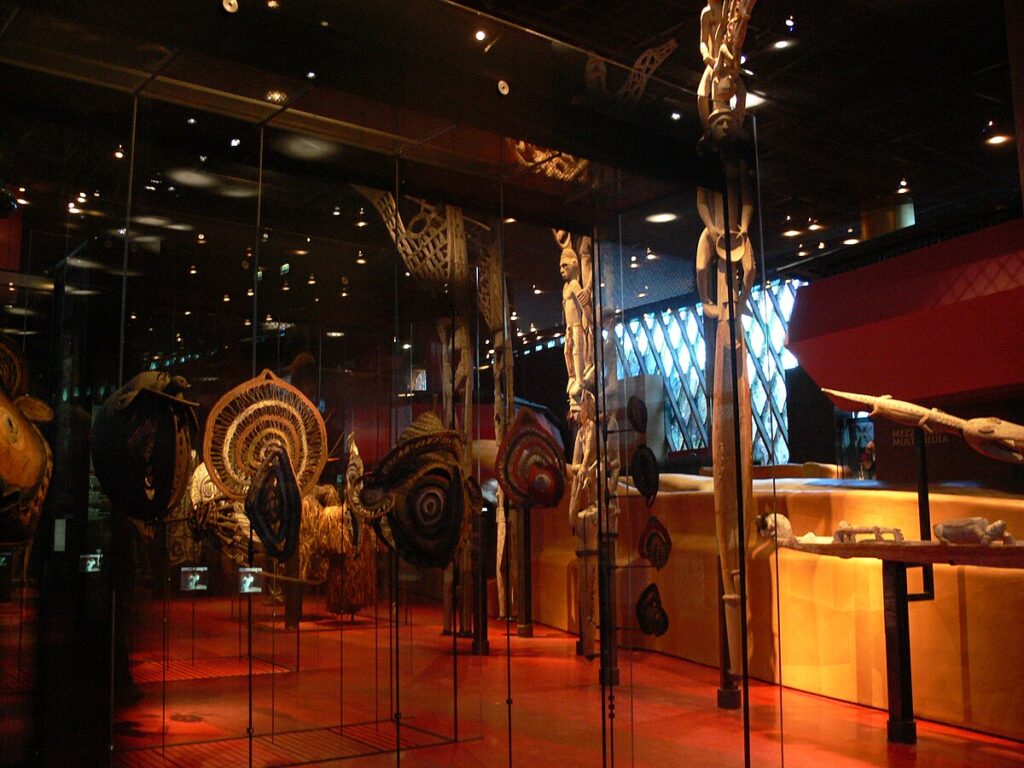
The way African artifacts are displayed in Western museums adds to the representational violence identified by many anthropologists. The objects are stripped of their original context, often sit beside displays of colonial lore, and take on an almost alien cultural form. African societies are portrayed as exotic, as never having come up to standard, as having no cultural memory. African culture is depicted overall as being inadequate and feckless.
The politics of cultural artifacts is bound up with the politics of memory. Restitution offers a chance to restore Africa’s identity and bring to an end the unjust treatment which has shaped the construction of the African mind.
Western Excuses for Keeping Stolen Artefacts
Many Western museums are now failing, morally and historically, to respond to the demands for restitution. Let us set out their arguments for the status quo.
The “Preservation Argument”. The idea is that in keeping artefacts, museums are promoting globalism. But this “globalism” does not include everyone. Very often Africans are divorced from their heritage because they cannot afford international travel and exorbitant museum entrance fees.
The Fear of Precedent. Museums are fearful that if one artefact is returned, all of them might then have to be returned. This fear of course reveals the massive scale of colonial theft and the prioritization of institutional well-being over historical justice.
The Market Argument. Some people believe that returning artifacts might lead to illegal smuggling or the promotion of corruption. Such concerns should be addressed through cooperation, capacity development, and legal redress. The indefinite retention of stolen property is certainly not the solution.
African Resistance, Agency and the Rise of the Restitution Movement
Africans have long been vocal about the loss of their heritage. The resistance first began in the 19th century with monarchs, chiefs, priests, and community leaders demanding the return of religious objects. After independence, both governments and scholars started to demand restitution. And in the 1970s, UNESCO and the Organization of African Unity made it their special issue.
In recent decades, however, African voices have grown stronger and more organised. Countries like Nigeria, Ethiopia, Egypt, Senegal, Mali, Rwanda, and Benin have included the restitution campaign in their national agendas. Networks of scholars, cultural activists, and communities of the diaspora have stirred public opinion, deploying digital processes, appeals to international law, and moral arguments.
African nations have also been investing in new museums to host restituted objects. The most visible are the Edo Museum of West African Art in Nigeria and the Museum of Black Civilisations in Senegal. These establishments are embodiments of more than mere physical spaces – they are symbolic reclamations of African cultural sovereignty.
The Politics of Refusal and Deferral of Restitution
Museums have returned some artefacts, but more often they have merely loaned them. Other institutions return one or two objects to dodge criticism, while keeping thousands of others. Another ploy is to call for certain levels of preservation or for political stability before artifacts are returned.
In addition, restitution can be complicated by legal obstacles. European laws often treat museum collections as “inalienable national property,” effectively prohibiting their deaccessioning. This only further informs us of how deep-rooted colonial spoliation is in the European national psyche.
Decolonisation through Restitution
Taking Africa’s objects back is not just a cultural issue. It is a political project for decolonisation which questions the authority of the Western world and redefines the relationship between Africa and the West. The main objectives of restitution are as follows:
Reinstating the Sovereignty of Cultural Memory. It gives African societies back the narrative of their own truth – whatever that may be and in whatever form or language they choose to narrate it.
Righting Historical Wrongs. Artefacts were taken with violent aggression, coercion and racism.
De-westernising the West. It undermines the claim that European museums are the “natural” custodians of global culture.
The Retention of African Knowledge Systems. The return of artefacts helps local scholars, artists, and communities uncover their cultural history.
Economic and Cultural Revivification. Museums and cultural investment have a part to play in nation building and development.
Curing Cultural and Religious Disruptions. Many objects have specific religious meaning that should be reconnected with their communities. Reparative justice is part of the broader struggle for global equity and the re-weighting of historical power.
The Ethical Imperative of the Return of Stolen Heritage
Ethical considerations underpin restitution, notably the basic principle of justice. If something was taken by violence, or under conditions of severe inequality, then it is not ethical to keep it. Moreover, returning artefacts acknowledges wounds, restores lost dignity, and recognizes the basic humanity of those whose heritage was violated.
The return of objects to Africa also carries huge benefits for education. Africans researching the accomplishments of their esteemed forefathers through objects retained on their own lands can profit from cultural pride, historical consciousness, and intellectual continuity.
Restitution as the Rebirth of Culture
The return of objects to their original homes will benefit African artists, historians, anthropologists, and cultural practitioners – enabling them to synthesize ancient traditions with contemporary visions. In this way creativity will be set free from the shell of ever-increasing art.
Furthermore, young generations are often disconnected from precolonial history by school curricula which have been shaped by colonial narratives. Restitution gives access to tangible evidence of their ancestor’s brilliance, challenges the narratives of inferiority that colonialism installs, and contributes to psychological liberation.
Conclusion
The return of Africa’s stolen artifacts is more than a matter of culture and museums. It is a deep moral, political, and historical necessity. It confronts colonial violence, asserts cultural memory, and restores justice to communities whose heritage was violated. The artifacts retained by museums in Europe and America are not just curios. They are fragments of African autonomy, creativity, spirituality, and intellectual history.
The movement for restitution challenges the world to confront the uncomfortable truths of empire and create cultural relationships founded on equality rather than dispossession. The return of cultural artefacts restores broken memories, and allows future generations to own their past.
Reclaiming the past means securing the future. Restitution is a form of magic – dignified and just – which allows African people to narrate their own history. The cries caused by the abduction of artefacts will grow louder until the world accepts the essential fact — the heritage of Africa belongs unequivocally to Africa.
By Zacham Bayei


