


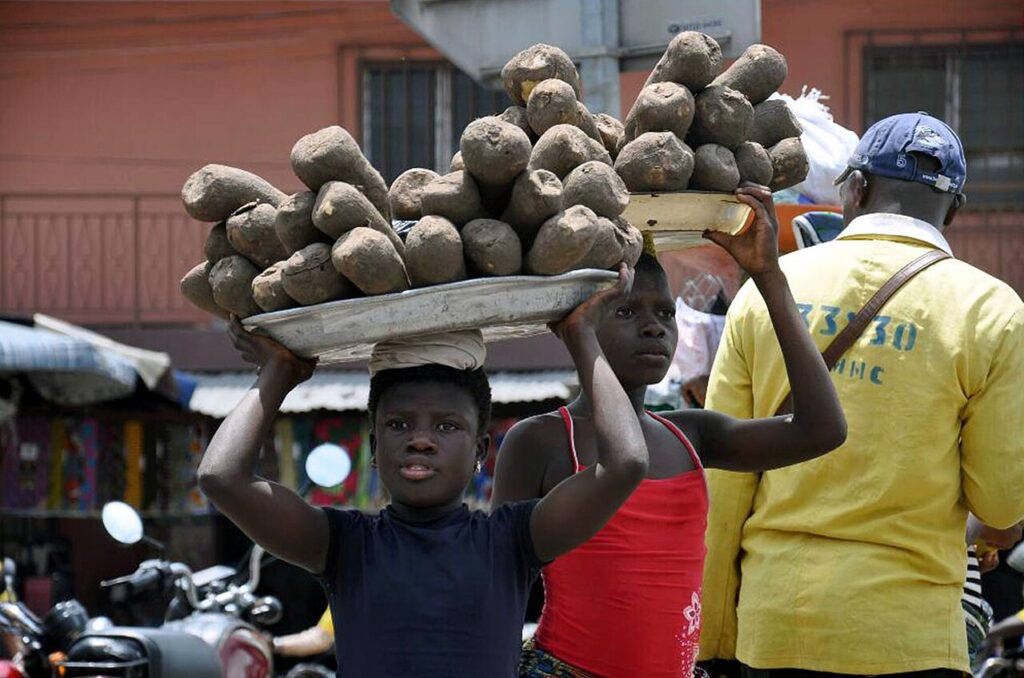
In an age that prides itself on human rights, technological advancement, and global interconnectedness, it is both ironic and tragic that slavery has not disappeared; it has merely evolved.
Modern slavery and human trafficking are not isolated criminal phenomena; they are the living shadows of historical injustices that the world has refused to confront fully.
To understand contemporary exploitation, one must trace its roots back to the brutal architecture of transatlantic slavery and colonial domination. The transatlantic slave trade remains one of the greatest crimes against humanity ever committed. Millions of Africans were forcibly displaced, dehumanized, and commodified in a system that enriched Western economies while devastating African societies. Yet, despite its scale and enduring consequences, this atrocity has never been adequately resolved. There has been no meaningful global reckoning, no comprehensive reparations, and no moral closure.
Today, the call for justice is being revived with renewed urgency. The government of Ghana has taken a principled stance by pushing for reparations on behalf of Africa and the African diaspora. In its recent proposal to the United Nations, Ghana highlighted the enduring socio-economic and psychological scars left by slavery.
This effort represents not only a demand for material compensation but also a plea for historical acknowledgment and moral responsibility. However, the resistance to this call exposes deeper truths about global power dynamics.
The fact that countries such as the United States, Israel, and Argentina voted against such a resolution is telling. It suggests not merely political disagreement, but a reluctance to confront historical complicity. These nations, directly or indirectly, benefited from systems of exploitation tied to slavery and colonial expansion. Their opposition raises critical ethical questions: can there be justice without accountability? Can there be reconciliation without truth?
It is particularly striking—and deeply troubling—that Israel, itself a historical beneficiary of reparations following the atrocities of the Holocaust through agreements with Germany, would oppose reparative justice for transatlantic slavery. This position appears morally inconsistent and raises profound questions about the universality of justice. If reparations are valid in one historical context, on what ethical grounds can they be denied in another, especially one of comparable magnitude and enduring consequence?
Equally perplexing is the position of the United Kingdom, which chose to abstain from the vote. This hesitation stands in contrast to the moral gestures already made within its own institutions. The Church of England has publicly acknowledged its historical involvement in slavery and committed approximately £100 million towards reparative initiatives—commendable, though still insufficient when measured against the scale of the harm inflicted. Such actions suggest an awareness of moral responsibility, making political ambivalence at the international level all the more difficult to justify.
Further complicating this position is the influence of political leadership within the United Kingdom. The leader of the Conservative Party has openly advocated voting against reparations, reflecting an enduring reluctance within certain political circles to engage meaningfully with historical accountability. This tension between institutional acknowledgment and political resistance reveals a fragmented moral landscape, where justice is often subordinated to expediency.
The moral dimension of this issue is not confined to states alone. Religious institutions, too, have begun to confront their historical roles. The Catholic Church, through Pope John Paul II, issued an apology at the dawn of the 21st century, acknowledging the Church’s complicity in historical injustices, including slavery. While symbolic, such gestures are significant; they affirm the principle that acknowledgment is a necessary step toward justice. Yet, apology without structural redress risks becoming an empty ritual.
Colonialism, too, must be recognized as a crime against humanity. Across Africa, colonial regimes systematically extracted resources, dismantled indigenous institutions, and imposed artificial borders whose consequences persist to this day.
The economic underdevelopment, political instability, and social fragmentation experienced in many African countries cannot be divorced from this history. Reparations, therefore, are not acts of charity; they are obligations grounded in justice.
Modern slavery and human trafficking are contemporary manifestations of these unresolved injustices. Today, millions are trapped in forced labor, sexual exploitation, and debt bondage. The victims are disproportionately drawn from vulnerable populations, many in Africa and the Global South, whose marginalization is itself a legacy of historical exploitation. The global economic system, much like its predecessor, continues to benefit from cheap, unprotected labor.
To address modern slavery effectively, the international community must move beyond surface-level interventions. Law enforcement and humanitarian responses, while necessary, are insufficient. What is required is a structural transformation—one that acknowledges historical crimes and addresses their ongoing impacts. This includes serious engagement with reparations, equitable economic policies, and a reimagining of global justice.
The struggle against modern slavery is, therefore, inseparable from the struggle for historical justice. Until the crimes of transatlantic slavery and colonialism are fully acknowledged and addressed, their legacy will continue to manifest in new and insidious forms. The call from Africa, led by voices like Ghana, is not just a regional demand—it is a universal moral challenge.
The question remains: will the world listen, or will it continue to evade responsibility? History is watching.
By Tauya Chinama